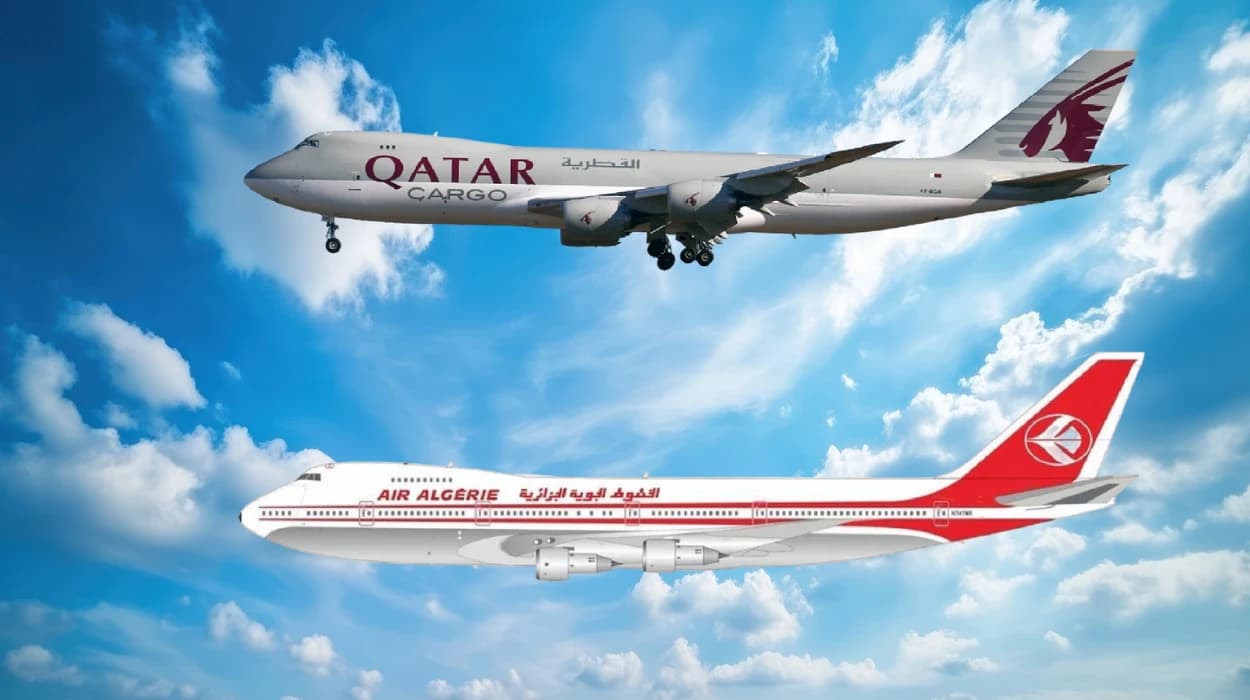
Qatar Airways and Air Algérie have launched a codeshare partnership starting 15 November 2025, increasing connectivity between Algeria and key markets in Asia and the Middle East through Hamad International Airport. The agreement offers travellers expanded travel options, including seven domestic Algerian destinations and several international hubs, with plans for further network expansion.
Qatar Airways and Air Algérie have officially established a codeshare partnership to enhance seamless travel connectivity between Algeria, Asia, and the Middle East, as reported by Abdelkader Nouioua of Business AMLive. This new collaboration builds on their existing interline relationship and allows travellers to book flights under either airline's flight code while providing increased access and convenience.
Expanded Network Access
Travellers can now book codeshare flights starting 15 November 2025, enabling easier connections to Algiers and six key domestic destinations operated by Air Algérie. These domestic cities include Annaba, Constantine, Oran, Tamanrasset, Timimoun, and Tindouf. The new codeshare significantly broadens Qatar Airways customers' reach into Algeria’s domestic market.
From the Algerian national carrier’s perspective, the partnership opens new one-stop travel options for passengers heading to international cities such as Hong Kong, Kuala Lumpur, and Muscat via Hamad International Airport, Doha’s award-winning hub. Air Algérie will also begin offering Privilege Club members of Qatar Airways the ability to earn Avios loyalty points on flights operated by Air Algérie under the codeshare agreement.
Strategic Importance of the Agreement
Thierry Antinori, Qatar Airways Chief Commercial Officer, emphasised:
“We are delighted to expand our partnership with Air Algérie through this new codeshare agreement, further strengthening our presence across key African markets.
This collaboration will offer travellers greater choice and seamless connectivity to the Middle East and Asia. It also reflects our ongoing commitment to deepening strategic partnerships, such as with Air Algérie, that enhance global connectivity from and to Africa through our hub, Hamad International Airport, which has been named by Skytrax as the ‘Best Airport in the Middle East’ for 11 consecutive years, and ‘World’s Best Airport’ in 2021, 2022, and 2024. We look forward to a long and fruitful partnership with Air Algérie.”
Echoing similar sentiments, Samy El Karim Boutemadja, Head of the Commercial Division at Air Algérie, stated:
“This codeshare agreement with Qatar Airways will certainly allow Air Algérie to enhance the company’s positioning in the Middle East and Asia, by offering its customers larger possibilities to reach new destinations, as well as promoting travelling to Algeria.
This agreement contributes to Air Algérie’s global strategy to expand its network and connections through its Algiers hub. We are looking forward to a successful partnership with Qatar Airways.”
Airline Profiles and Network Footprint
Qatar Airways currently operates 213 weekly flights to 30 cities across 21 African countries. It has 30 interline and six codeshare agreements with various African carriers, asserting its strong commitment to growth in the continent's aviation market.
Air Algérie, fully owned by the Algerian State, serves as the nation’s flag carrier, operating flights across four continents including Africa, Europe, Asia, and North America. Using Algiers International Airport as its hub, the airline serves over 80 destinations on both regular and charter bases with a daily average of 300 flights. Air Algérie has established a comprehensive route network of more than 200 routes and operates subsidiaries including Air Algérie Catering, Air Algérie Cargo, and Amadeus Algérie.
The current codeshare agreement, though effective 15 November, is expected to expand further with additional destinations to be added soon. Both airlines aim to deepen their collaboration to strengthen connectivity options not only between Algeria and Asia and the Middle East but also wider global markets.
This partnership is seen as a strategic move to bolster travel and trade between Africa and other regions, while promoting Algeria as a key travel hub through increased accessibility and flight choices for both leisure and business travellers.