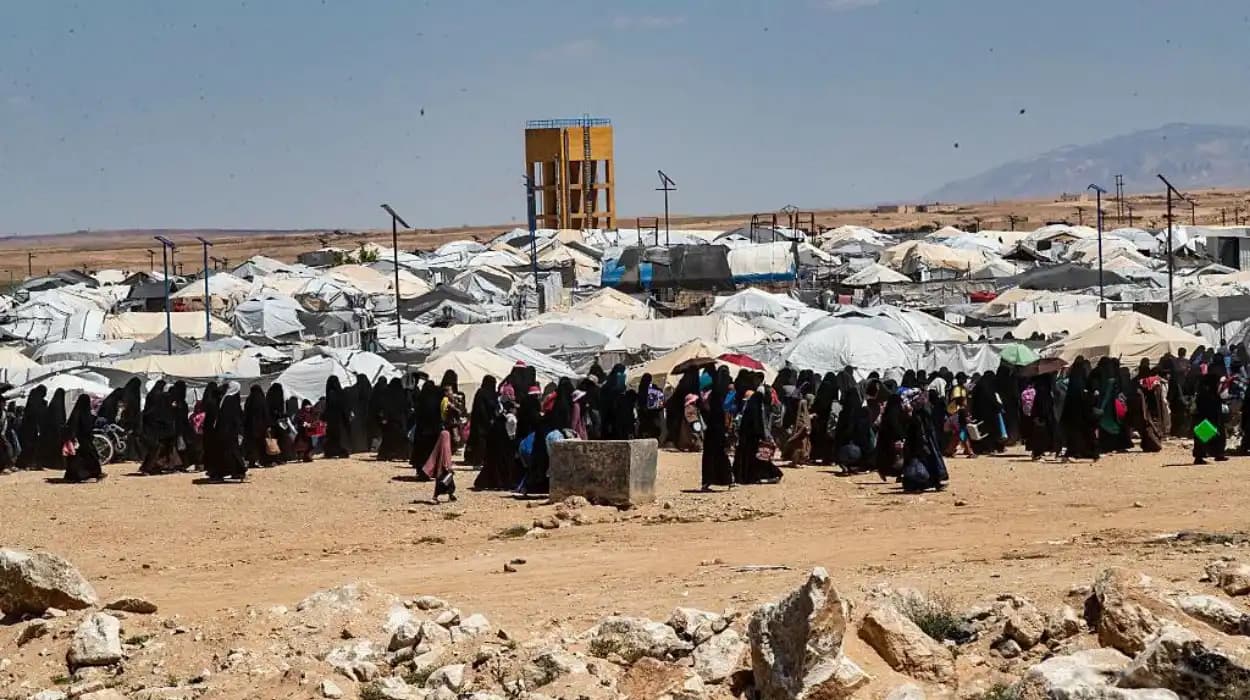
Hasakah (The Palestine Telegraph Newspaper) January 31, 2026 – Essential supplies at Syria's al-Hol displacement camp are running critically low as ongoing clashes between local forces and militants prevent aid deliveries from reaching the facility. The United Nations and humanitarian organisations report severe shortages of food, water, medical supplies and fuel, affecting over 40,000 residents, predominantly women and children. Camp authorities have imposed restrictions while security incidents, including killings and kidnappings, continue to disrupt operations.
The al-Hol camp, located in northeastern Syria under the control of the Syrian Democratic Forces (SDF), faces its most acute crisis since 2019 as fighting along access routes has halted truck convoys carrying relief supplies. Residents report rationing food and water while medical services operate at minimal capacity. International agencies warn that without immediate access, the situation risks rapid deterioration with potential disease outbreaks and increased mortality.
Clashes Along Supply Routes Halt Critical Aid Deliveries
Armed clashes between SDF fighters and Islamic State (IS) sleeper cells have intensified along the main supply routes to al-Hol camp, located approximately 100 kilometres northeast of Deir ez-Zor. SDF statements report that IS militants ambushed convoys and established checkpoints, forcing humanitarian organisations to suspend operations. The fighting has resulted in at least 12 SDF fighters and 20 militants killed over the past week, according to military sources.
UNHCR spokesperson reported that three planned aid convoys carrying 50 tonnes of food rations, medical supplies and hygiene kits were cancelled due to security risks. Water trucking has been reduced by 70 per cent, leaving camp sections without potable water for days. Fuel shortages have limited generator operations, affecting lighting, refrigeration of medicines and water pumping systems.

Camp administration has implemented emergency measures including reduced meal portions and prioritisation of vulnerable groups. However, residents report that basic commodities like flour, rice and cooking oil have reached critically low levels. Medical staff have exhausted supplies of insulin, antibiotics and painkillers, forcing rationing of treatments for chronic conditions.
Camp Population Faces Acute Shortages and Security Threats
Al-Hol camp currently houses approximately 42,000 displaced people, including 60 per cent children under 12 years old and significant numbers of foreign women and children associated with defeated IS fighters. The population includes Iraqis, Syrians and nationals from over 60 countries who have nowhere else to return. Recent security incidents within the camp include five reported killings, three kidnappings and multiple assaults attributed to IS-affiliated families.
Camp security forces have conducted nightly raids targeting suspected militants, recovering weapons caches including rifles, grenades and suicide vests. However, these operations have heightened tensions among residents, with some families reporting arbitrary detentions and property damage. Women heading households face particular vulnerability, as male protectors are often absent due to deaths, detentions or flight.
Malnutrition rates have increased, with screening identifying 15 per cent of children under five as acutely malnourished. Diarrhoea cases have surged due to contaminated water sources, while respiratory infections spread rapidly in unheated tents during winter conditions. Pregnant women and new mothers report inadequate prenatal care and breastfeeding support.
Humanitarian Agencies Sound Alarm Over Access Restrictions
The United Nations Office for the Coordination of Humanitarian Affairs (OCHA) has classified al-Hol as a Level 3 emergency, indicating the highest severity. UNHCR reports that camp food stocks will be exhausted within 72 hours without resupply. The World Food Programme has exhausted its emergency reserves in Hasakah governorate due to competing crises.
Médecins Sans Frontières (MSF) medical teams report treating 200 patients daily with depleted pharmaceutical stocks. The organisation has appealed for immediate medical evacuations of 50 critical cases including burns victims, severe malnutrition and chronic disease complications. International Medical Corps reports 80 per cent occupancy in its camp clinic with no capacity for surgical emergencies.
UNICEF warns of imminent catastrophe for 25,000 children, citing risks of hypothermia, dehydration and infectious disease outbreaks. The agency reports 300 measles vaccinations overdue due to supply shortages. Non-food item distributions including winter clothing, blankets and hygiene kits have ceased completely.
SDF Security Measures Conflict With Humanitarian Access
Syrian Democratic Forces have established multiple checkpoints and conducted clearance operations along the 120-kilometre supply route from Hasakah city to al-Hol. Military spokespersons state that these measures are essential to neutralise IS cells responsible for 18 attacks on camp perimeters since November. Drone surveillance has identified 40 militant positions destroyed in airstrikes.
However, the security lockdown has inadvertently blocked humanitarian access, creating what aid agencies describe as a "triple bind" of IS threats, SDF restrictions and weather challenges. Convoys require armed escorts and demining teams, consuming scarce resources. Night-time movements are prohibited due to ambush risks.

Camp administration has requested international funding for enhanced security including watchtowers, perimeter fencing and advanced surveillance systems. However, donor fatigue and competing global crises have limited responses. European governments face domestic pressure regarding their citizens in the camp, complicating repatriation discussions.
Internal Camp Dynamics Fuel Security Concerns
Al-Hol's population divides into "Annex" sections housing foreign IS families under high security and main camp areas with Syrian and Iraqi residents. The Annex holds approximately 5,000 people subjected to restricted movement and constant surveillance. Reports document systematic violence by IS enforcers targeting families perceived as disloyal.
Recent incidents include the beheading of a 17-year-old boy accused of collaboration, acid attacks on unveiled women and arson against NGO tents. Security forces recovered IS propaganda materials, execution lists and cryptocurrency wallets funding militant activities. Female IS members have established parallel governance structures collecting taxes and enforcing dress codes.
Repatriation efforts have removed 1,200 foreign nationals since 2023, primarily children from Kazakhstan, Uzbekistan and Russia. However, complex legal processes and parental refusal complicate adult returns. Western governments face court challenges over citizenship stripping policies.
Winter Conditions Exacerbate Humanitarian Crisis
January temperatures in Hasakah governorate have dropped below freezing, increasing hypothermia risks for tent-dwelling residents. UNHCR reports 40 per cent of shelters require winterisation including plastic sheeting, insulation and heating stoves. Firewood collection has been prohibited due to deforestation and security risks.
Snow and mud have rendered camp roads impassable for ambulances and supply trucks. Water pipes have frozen and burst, contaminating remaining supplies. Cooking facilities struggle without gas canisters, forcing residents to burn shelter materials for heat.
Children face disrupted education as winter classrooms remain unheated. Literacy rates among camp children have fallen below 20 per cent. Psychosocial support programmes have suspended home visits due to access restrictions.
International Response Hampered by Access and Funding Gaps
United Nations Security Council briefings have highlighted al-Hol as Syria's most neglected crisis. Member states pledged $85 million in November but disbursements totalled 23 per cent. US funding covers 40 per cent of UNHCR operations but faces congressional scrutiny over camp security.
European Union humanitarian chief has called for "humanitarian corridors" with international monitoring. Turkey advocates accelerated repatriation while Russia demands prosecution of IS foreign fighters. Gulf states have increased funding for food and shelter but avoid security commitments.
NGOs report donor conditions increasingly tie aid to repatriation quotas and counter-terrorism cooperation. Private sector donations have filled medication gaps but cannot address food or fuel shortages. Cryptocurrency appeals have raised $2 million for emergency supplies.

Long-term Solutions Remain Elusive
Camp administrators project operations must continue through 2028 pending stabilisation of IS threat and repatriation progress. Construction of permanent structures awaits funding and security guarantees. Vocational training programmes for women have trained 800 participants but lack market access.
Regional stabilisation initiatives including SDF-IS negotiations have stalled. Iraqi government repatriation flights evacuated 150 families last month. European countries accepted 45 orphans under humanitarian parole schemes.
UNHCR integration projects face local community resistance due to security fears. De-radicalisation programmes report 70 per cent success rates among youth participants. Legal frameworks for prosecuting IS members remain inconsistent across jurisdictions.
The convergence of security threats, winter hardships and supply shortages has created al-Hol's most precarious situation since IS territorial defeat. Immediate access restoration remains the critical unmet need according to all operating agencies.