Damascus (The Palestine Telegraph Newspaper) February 02,
2026 –
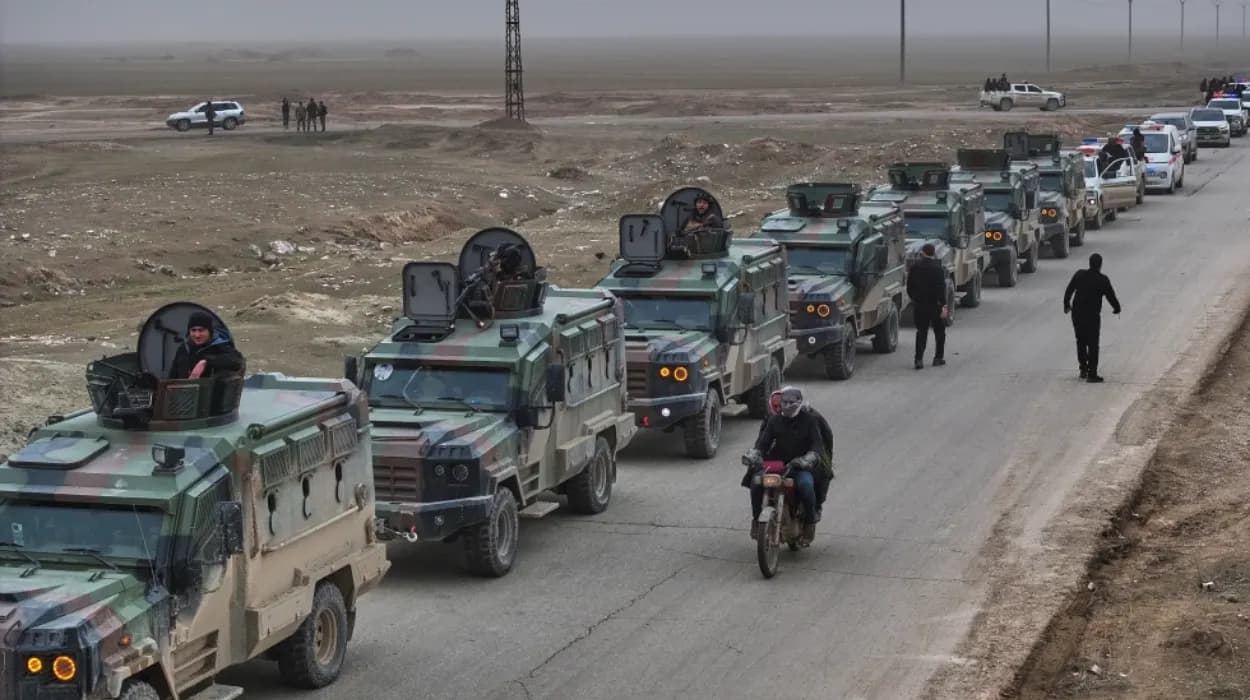
Syrian Interior Ministry forces entered the key northeastern city of Hasakah on
February 1, 2026, under a deal reached with the Kurdish-led Syrian Democratic
Forces (SDF). The deployment marks the first major government entry into
SDF-held territory since the January 30 agreement. Syrian state media confirmed
2,500 troops secured government buildings and border checkpoints without
resistance.
The agreement, signed in Damascus on January 30 between Interior Minister Mohammed al-Rahmoun and SDF commander Mazloum Abdi, stipulates gradual handover of eight cities and 14 military bases. Hasakah deployment follows curfew implementation by SDF forces ensuring orderly transition. Joint patrols commenced February 1 along the Khabur River dividing government and SDF zones.
Details of Interior Ministry Deployment in Hasakah

Syrian Interior Ministry 88th Brigade established checkpoints at Hasakah Governorate building, central market, and Qamishli Road junction by 09:00 local time. 1,200 personnel from Rapid Intervention Forces reinforced positions at al-Nasr checkpoint and airport perimeter. Ministry vehicles displayed Syrian flags alongside SDF markings during joint foot patrols.
SDF withdrew 800 fighters from urban districts to rural bases east of the city. Interior Ministry units conducted flag-raising ceremonies at 12 public buildings documented by SANA footage. No arrests or clashes reported during 72-hour operation phase.
Governorate officials resumed administrative functions processing 340 civil registry applications first day. Electricity and water utilities transferred to national grids under joint technical committees.
January 30 Damascus Agreement Terms Specified
The 14-point protocol outlines SDF handover of Hasakah, Qamishli, Raqqa, Deir ez-Zor, Manbij, Tabqa, Kobani, and Tal Rifaat by March 15. Syrian government assumes control of 45 oil and gas fields producing 80,000 barrels daily. SDF retains security role in 23 detention camps housing 12,000 ISIS suspects.
Article 7 establishes joint military coordination centre in Raqqa preventing Turkish incursions. Revenue sharing allocates 60 per cent oil income to Damascus, 40 per cent SDF reconstruction fund. Article 12 guarantees Kurdish language instruction in 340 schools.
UN Syria envoy Geir Pedersen witnessed signing alongside Russian and Iranian guarantors.
SDF Statements on Handover Implementation
SDF spokesperson Mustafa Bali confirmed complete withdrawal from Hasakah government quarter by 18:00 February 1. Abdi addressed fighters in Qamishli stating deployment preserves "national unity against common threats." Kurdish YPG units redeployed to Euphrates east bank maintaining defensive positions.
SDF General Command issued order 47/2026 regulating civil servant reintegration retaining 2,800 local employees. Qamishli hospitals transferred patient records containing 14,500 active files to Health Ministry systems.
Syrian Government Official Reactions

Interior Minister al-Rahmoun broadcast nationwide address confirming deployment success absent provocations. President Bashar al-Assad chaired Security Council meeting reviewing phase two timetables targeting Raqqa entry February 5. Prime Minister Mohammad Ghazi al-Jalali announced 2 billion Syrian pounds reconstruction allocation for Hasakah.
State media aired footage of 500 civil servants resuming duties at 28 directorates. Syrian Arab News Agency reported 1,200 tons wheat delivery to local silos from national reserves.
Historical Context of Government-SDF Relations
Government-SDF understandings originated 2017 Tabqa joint operations against ISIS. 2019 Manbij Military Council dissolved following Russian-brokered deal. Qamishli saw 2020 dual administration under deconfliction protocols.
Hasakah clashes October 2023 killed 21 fighters prompting Qatari mediation. January 2026 talks accelerated following US Syria force posture review.
Russian and Iranian Guarantor Roles Confirmed
Russian Hmeimim base commander General Sergey Surovikin verified compliance satellite imagery. Iranian Quds Force liaison Colonel Rezaei coordinated Qamishli deployments preventing friction incidents. Moscow announced 200 military police deployment supporting transition stability.
Tripartite coordination cell established at T4 airbase processes daily position reports. Russian reconciliation centre registered 1,200 SDF fighters amnesty applications.
Turkish Monitoring and Reactions Reported

Turkish Defence Ministry confirmed no border violations during Hasakah deployment. MIT intelligence tracked SDF withdrawals via Hatay station intercepts. Ankara conveyed non-interference stance through Astana format communications.
Syrian National Army paused patrol activity along Kobani frontline pending Raqqa handover effects.
United Nations and International Observations
UN Disengagement Observer Force documented flag transfers at 18 locations. OCHA reported 340,000 Hasakah civilians unaffected by military movements. UNHCR confirmed 12,000 camp residents stability under dual security arrangements.
European Union special representative Kati Piri welcomed agreement implementation. US Central Command acknowledged deconfliction line adjustments.
|
City |
SDF Withdrawal Date |
Govt Entry Date |
Personnel Deployed |
|
Hasakah |
Feb 1 |
Feb 1 |
2,500 |
|
Qamishli |
Feb 7 |
Feb 8 |
3,200 |
|
Raqqa |
Feb 5 |
Feb 6 |
4,100 |
|
Deir ez-Zor |
Feb 12 |
Feb 13 |
2,800 |
Oil Field Handover Procedures Detailed
SDF transferred Al-Omar, Rmeilan, and Tanak fields producing 65,000 barrels daily to Syrian Petroleum Ministry. Joint teams inventoried 1,200 wells and 340km pipelines. Production resumed 80 per cent capacity under national company management.
Gas facilities at Hajin and Shadadi deliver 10 million cubic metres daily to national grid. Revenue transfers commence February 10 per protocol schedule.
Local Government Restoration Processes
Hasakah City Council convened first session February 1 electing mayor from 15 candidates. 28 municipal departments activated processing 1,200 service requests. Education directorate enrolled 45,000 students resuming classes February 3.
Health Ministry deployed 60 doctors staffing 8 clinics serving 180,000 residents. Agriculture department distributed 2,500 tons seeds to 4,200 farmers.
Security Coordination Mechanisms Established
Joint security room at Hasakah airport coordinates 24-hour operations. Deconfliction hotline links SDF YPG headquarters with Interior Ministry operations centre. Russian officers moderate daily coordination meetings.
Checkpoints established at 23 locations regulate vehicle movements absent restrictions on civilians. Night curfew lifted February 2 following stability confirmation.
Economic Administration Transfers Completed
SDF finance office transferred 1.2 billion Syrian pounds reserves to Central Bank Hasakah branch. Customs directorate resumed operations processing 45 trucks daily. Trade ministry issued 340 business licenses reinstating commercial activities.
Local markets reopened serving 120,000 daily customers. Fuel stations received 450,000 litres national allocation.
Media Access and Information Flows
SANA journalists embedded with deployment units broadcast live coverage. SDF media office facilitated 28 international correspondents Hasakah hotel. Al-Ikhbariya aired 6 hours daily programming from city studios.
Kurdish Ronahi TV maintained broadcasts under dual administration protocols.
Phase Two Deployment Preparations Underway
Raqqa entry scheduled February 5 precedes Deir ez-Zor operations February 12. Qamishli deployment February 8 targets 3,200 personnel securing border triangle. Kobani and Manbij handovers complete transition by March 1.
Interior Ministry mobilised 18,000 troops nationwide supporting eight-city deployments. Logistics trains deliver 2,100 tons supplies to forward depots.
International Diplomatic Confirmations
US Syria envoy Barbara Leaf confirmed agreement implementation during Ankara consultations. UN Security Council noted deployment absent Chapter VII violations. Arab League Damascus committee verified civilian protections.
League of Arab States announced €50 million reconstruction pledge contingent full implementation.