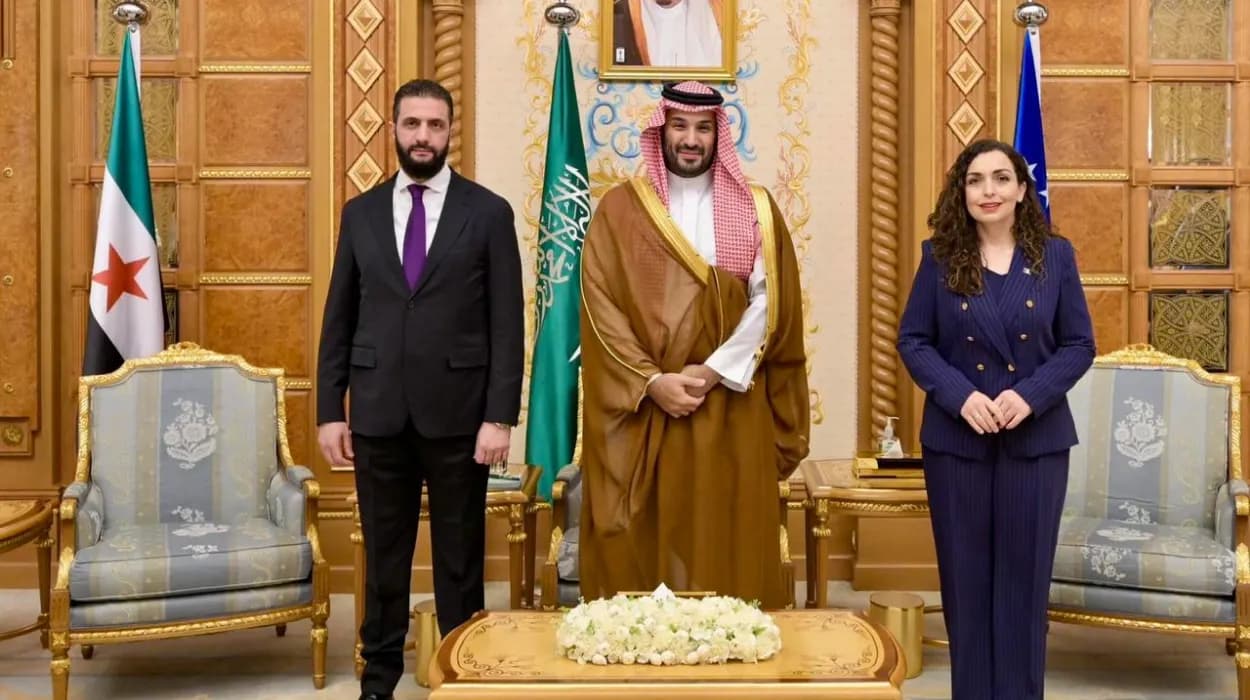
Syria’s interim government under President Ahmad al-Sharaa announced an influx of over $28 billion in foreign investment within six months, citing transformative legal reforms and expanding partnerships with Saudi Arabia, Qatar, the UAE, Türkiye, and others, as reported at the Future Investment Initiative in Riyadh. The investments mark a pivotal step in Syria’s post-conflict recovery, with international assurances for investor protection and renewed engagement with global financial institutions.
Syrian Interim Government Ushers Major Foreign Investment
President Ahmad al-Sharaa revealed Syria’s landmark success in attracting over $28 billion in foreign investment during his address at the Future Investment Initiative (FII) conference in Riyadh, attended by Saudi Crown Prince Mohammed bin Salman and leading regional and global investors, as reported by SANA and detailed by journalist Dalal Saoud for UPI. The announcement reflects a dramatic turnaround following years of conflict and economic isolation, marking a fresh chapter for Syria’s transitional government.
According to al-Sharaa, the interim administration’s overhaul of investment laws has resulted in an environment deemed “among the most advanced in the world”, guaranteeing legal protection and transparency for international investors. Al-Sharaa asserted, as covered by Dalal Saoud of UPI,
“What the world stands to gain from Syria’s stability is immense,”
positioning the country as a connecting trade corridor linking the Middle East, Europe, and Asia.
Legal Reforms and Sanctions Relief Lay Foundation
Speaking to the FII gathering, President Ahmad al-Sharaa, as recounted by Daily Sabah’s correspondents, highlighted that Syria’s investment laws had changed to
“allow foreign investors to transfer funds out of the country”.
This followed critical support from Saudi Arabia and Türkiye, which enabled the lifting of most U.S. sanctions in June 2025—a development viewed as essential for facilitating capital inflow and international partnerships.
Al-Sharaa stated:
“The opportunity in Syria is enormous, and there’s room for everyone,”
emphasising his government’s intention to rebuild via investments over reliance on aid, a sentiment also echoed in Arab News coverage.
Key Investment Agreements and International Support
As reported by Reuters and Times of Israel, Saudi Arabia pledged more than $6 billion in investments for Syria in July 2025, including $2.93 billion targeted at real estate and infrastructure projects. Additional partnership deals between Saudi Arabia and Syria valued at $6.4 billion were signed to support reconstruction, according to Times of Israel reporters. Furthermore, in April, Saudi Arabia and Qatar jointly committed $15 million to settle part of Syria’s debt to the World Bank, supporting the country’s pathway to financial recovery.
Arab News reports twelve major deals secured in August, worth $14 billion, focusing on infrastructure, transportation, and real estate to revive Syria’s war-damaged economy.
Regional Partners and Broadened Engagement
Syria’s new partnerships encompass Saudi Arabia, Qatar, the UAE, Türkiye, Bahrain, Jordan, and U.S. companies, as detailed in Türkiye Today coverage. Emirati, Saudi, and Qatari firms lead the capital inflow, with joint projects designed to not only reconstruct but also reposition Syria as a commercial nexus in the region.
Recovery Strategy and Economic Outlook
President Ahmad al-Sharaa outlined a recovery strategy prioritising sustainable development and economic stability over external assistance. The aim is to “rebuild everything that was destroyed,” with the government undertaking responsibility to provide a secure environment for investors and facilitate trade networks.
The World Bank Group estimates the total cost of Syria’s reconstruction to be approximately $216 billion, of which direct physical damage to infrastructure, housing, and non-residential buildings accounts for about $108 billion, as reported by multiple outlets including Türkiye Today and Times of Israel.
Transitional Leadership and Institutional Reform
Since taking office 10 months ago after the overthrow of Bashar al-Assad, President Ahmad al-Sharaa’s transitional government has focused on reestablishing diplomatic and economic ties with regional and Western states, supported by significant legal and structural reforms. The transitional cabinet under Sharaa introduces new ministries, such as sports and emergencies, and a constitutional declaration attuned to Islamic law, women’s rights, and freedom of expression, according to Reuters.
Outlook for Foreign Investors and International Community
Major investors anticipate further expansion in Syria’s investment prospects if remaining U.S. sanctions are repealed. As reported in Arab News and Daily Sabah, U.S. congressional action on the Caesar sanctions remains pivotal for the next wave of investment, although exemptions have already paved the way for increased international engagement.
Saudi Crown Prince Mohammed bin Salman has played a central role in bolstering Syria’s recovery, convening historic meetings with U.S. President Donald Trump and Ahmed al-Sharaa and facilitating direct commitments for sanctions relief, according to various sources including Daily Sabah and Arab News.
Media Landscape and Policy Challenges
While international investment surges, independent Syrian and foreign media have faced challenges including bureaucratic hurdles, detentions, and selective information policies under the interim government, as described by Nour Haddad and other journalists in Syria Untold. The International Federation of Journalists has voiced concern over restrictions on media freedom, underscoring the need for continued transparency as Syria rebuilds its institutions.
Within half a year of assertive political and economic reforms, Syria’s interim government led by President Ahmad al-Sharaa has successfully secured $28 billion in foreign investment, leveraging international partnerships and legal guarantees to lay the groundwork for reconstruction and economic recovery. The government’s strategy, underpinned by investment-driven recovery and expanded regional engagement, positions Syria as an emerging hub for trade and development, with further potential as legal and political reforms advance and global investors take confidence in the new regulatory landscape.