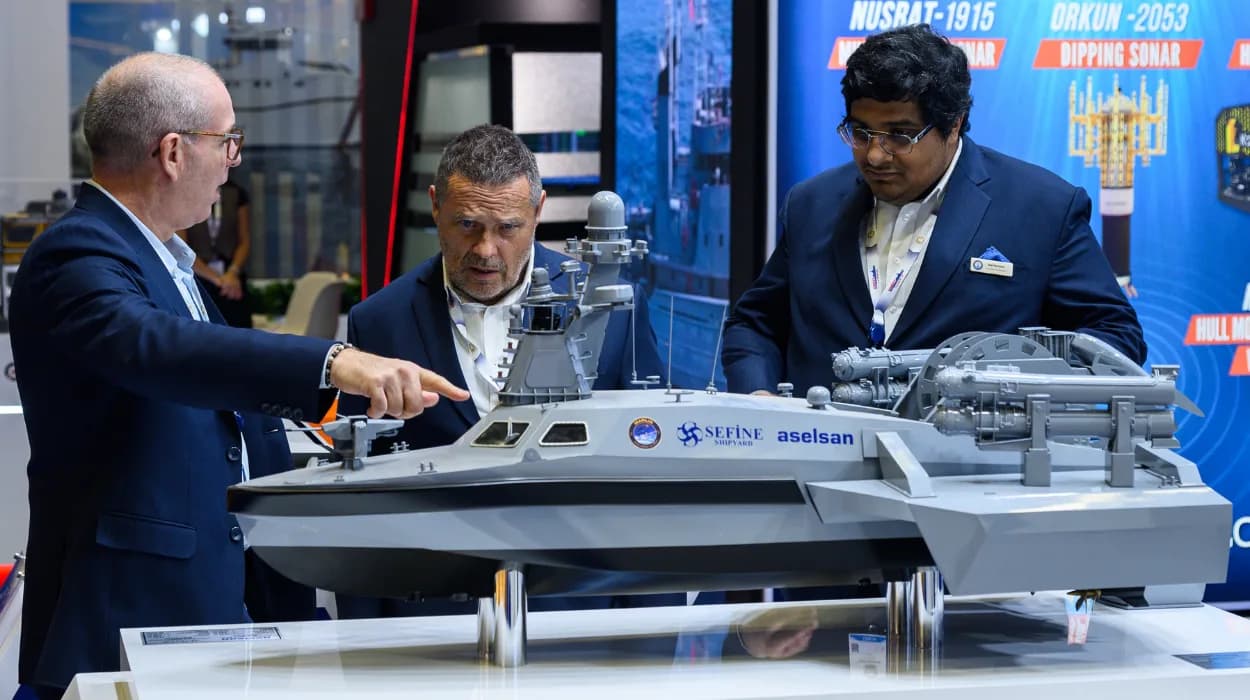
Doha (The Palestine Telegraph Newspaper) 23 January 2026 – Turkey and Qatar finalised several defence cooperation agreements during the Naval Defence Expo 2026 in Doha. The deals cover naval vessel construction, technology transfers, and joint training programmes. Officials from both nations highlighted enhanced strategic partnership amid regional security priorities.
Turkish Defence Minister Yaşar Güler and Qatari Minister of State for Defence Affairs Khalid bin Mohammed Al Attiyah signed four memoranda of understanding on 22 January 2026 at the Qatar International Maritime Defence Exhibition and Conference (DIMDEX). The agreements followed bilateral talks on the expo sidelines, attended by industry representatives from both countries. Qatar News Agency reported the pacts aim to bolster maritime security capabilities through shared expertise.
The primary contract involves Turkey's STM company supplying two corvette-class vessels to the Qatari Emiri Naval Forces, valued at $1.2 billion. Additional deals include Baykar drone integration for Qatari patrol boats and Aselsan radar systems for existing frigates. Signatures occurred during the expo's opening ceremony, presided over by Qatari Emir Sheikh Tamim bin Hamad Al Thani.
Specific Defence Deals Signed at DIMDEX 2026

Credit: defenceprocurementinternational.com
The corvette agreement specifies delivery of two Ada-class ships by 2029, equipped with 76mm main guns and vertical launch systems. Construction begins at Istanbul Naval Shipyard with Qatari officers embedded in design phases. The deal incorporates technology transfer clauses for local maintenance in Doha.
Baykar signed a $450 million contract for 12 Bayraktar TB3 drones, adapted for maritime surveillance. Aselsan secured a $300 million radar upgrade package for four Qatari guided-missile boats. Roketsan provided $200 million in missile supplies, including Atmaca anti-ship munitions.
Joint training programmes allocate 50 Qatari personnel for instruction at Turkish naval academies in 2026-2027. A framework agreement establishes annual exercises in the Arabian Gulf, focusing on anti-submarine warfare and mine countermeasures.
Statements from Turkish and Qatari Officials
Turkish President Recep Tayyip Erdoğan sent a video message praising the partnerships as models of Islamic solidarity. He noted Turkey's export volume to Qatar reached $2.5 billion in defence goods since 2020. Minister Güler emphasised interoperability between Turkish and Qatari systems during joint operations.
Qatari Prime Minister Sheikh Mohammed bin Abdulrahman Al Thani described the deals as pivotal for national defence modernisation. He referenced Qatar's $15 billion defence budget allocation for 2026, with Turkey as a priority partner. Internal Security Force Commander Major-General Abdulrahman bin Hamad Al Kaabi attended the signing.
Industry executives from STM and Baykar conducted live demonstrations of unmanned surface vessels at the expo docks. Attendees included delegations from 42 countries, with pavilions showcasing over 250 exhibitors.
Background on Turkey-Qatar Defence Relations

Credit: gulfif.org
Relations strengthened after the 2017 GCC blockade of Qatar, when Turkey provided food and military support. Joint exercises commenced in 2019 with the first Anatolian ship deployment to Doha. Qatar hosts 5,000 Turkish troops under a 10-year basing agreement renewed in 2025.
Previous deals included 36 Bayraktar TB2 drones delivered in 2022 and armoured vehicles from Otokar. Trade volume hit $4 billion annually by 2025, spanning energy and construction alongside defence. High-level visits, including Erdoğan's 2024 Doha trip, laid groundwork for expo outcomes.
DIMDEX, held biennially since 2004, drew 12,000 visitors in 2026. The event featured static displays of Turkish frigates moored in Doha Port. Qatari state fund Qatar Investment Authority holds stakes in Turkish defence firms.
Expo Highlights and Participating Companies
STM showcased scale models of Kızılelma combat drones alongside corvette mockups. Baykar conducted flight demonstrations over Doha Bay using TB3 prototypes. Aselsan exhibited fire-control systems integrated with Qatari specifications.
Qatari firms like Barzan Holdings signed subcontracts for local assembly lines. International exhibitors included Lockheed Martin and Naval Group, though Turkish-Qatari deals dominated headlines. Conference sessions addressed hybrid warfare threats in the Gulf.
Naval parades featured Qatari missile boats alongside Turkish MEKO frigates. Static displays included underwater drones and satellite-linked command systems.
Strategic Context of Bilateral Defence Cooperation
Deals align with Qatar's Vision 2030 military self-sufficiency goals. Turkish technology fills gaps in Qatar's naval inventory amid regional tensions. Both nations coordinate on Yemen and Somalia counter-piracy patrols.
GCC security exercises, including Arabian Gulf Security 4 underway in Qatar, incorporate Turkish equipment trials. Joint ventures target third-country exports, with Indonesia expressing interest in co-produced corvettes.
Economic ties underpin military links, with Qatar Airways expanding Istanbul routes and Turkish contractors building Lusail stadiums. Currency swap agreements stabilise transactions at 15 billion Qatari riyals yearly.
Implementation Timelines and Training Commitments
Corvette keels lay within six months, with sea trials scheduled for 2028. Drone deliveries commence quarterly from Q3 2026. Radar retrofits complete by end-2027 under Aselsan supervision.
Training pipelines dispatch 200 Qatari cadets annually to Aksaz Naval Base. Language instructors embed in Doha for Farsi-Turkish terminology standardisation. Certification programmes qualify Qatari technicians for Tier-2 maintenance.
Logistics hubs establish in Ras Laffan port for ammunition storage. Spare parts warehouses stockpile for 10-year operational cycles.
Regional Reactions and Broader Implications
Saudi Arabia monitored developments without comment, focusing on internal exercises. UAE officials attended expo but prioritised European suppliers. Iran state media noted the deals as part of Turkish expansionism.
US Central Command welcomed interoperability gains, citing joint exercises at Al Udeid. NATO liaison officers observed demonstrations for compatibility assessments.
Pakistani naval delegation discussed technology transfers for their frigates. African nations, including Somalia and Djibouti, sought similar packages.
Industry and Economic Dimensions of Agreements
Contracts generate 3,000 direct jobs in Turkey and 1,500 in Qatar over five years. Offset clauses mandate 40% local content in future builds. Research centres co-fund drone autonomy projects.
Financing blends Qatari grants with Turkish export credits. Delivery milestones trigger progress payments verified by joint committees.
Expo generated $5 billion in total deals, with Turkey capturing 25% share. Follow-on conferences schedule for Istanbul in 2027.
Future Collaboration Initiatives Planned

Memoranda outline joint ventures for next-generation frigates by 2030. Artificial intelligence integration forms research priority. Submarine projects enter feasibility studies.
Annual defence industry forums rotate between Doha and Ankara. Student exchanges target 500 participants by 2030.
No further signings reported as of 23 January. Expo continues through 25 January with business matchmaking sessions.