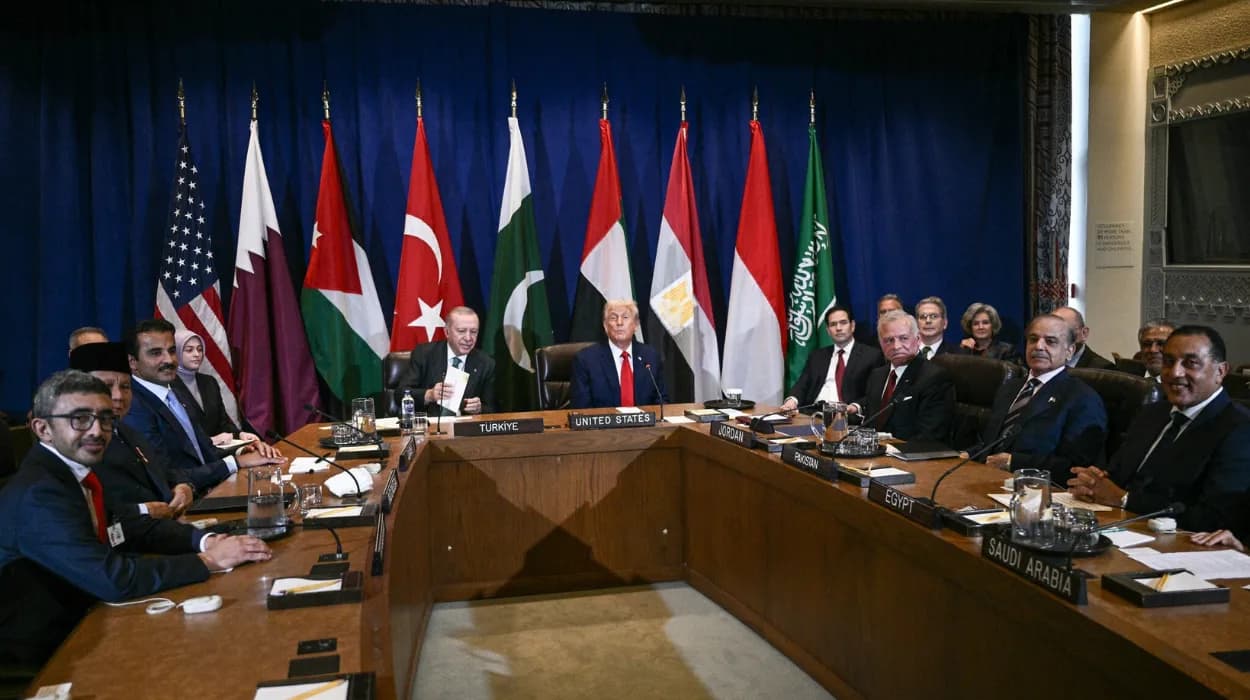
Turkey is set to host a crucial meeting of Muslim-majority countries in Istanbul to discuss the fragile ceasefire in Gaza, while Israel has expressed strong opposition to Turkey’s military involvement in any international peace force for Gaza. Turkish President Recep Tayyip Erdogan condemned Israel’s actions despite the ceasefire, urging international support for Gaza's humanitarian needs and reconstruction.
Turkey to Host Gaza Peace Conference
As reported by Turkish Foreign Minister Hakan Fidan at a press conference, Turkey will convene a summit in Istanbul on Monday involving top diplomats from several Muslim-majority countries, including Egypt, Indonesia, Jordan, Pakistan, Qatar, Saudi Arabia, and the UAE. The meeting aims to address the progress and challenges of implementing a peace plan for Gaza, focusing on obstacles, next steps, and the support available from Western partners, particularly the United States.
Context of the Ceasefire and International Role
The ceasefire in Gaza is based on a 20-point peace proposal brokered by US President Donald Trump, signed in September by key regional leaders including Turkish President Recep Tayyip Erdogan, Egypt’s Abdel Fattah el-Sisi, and Qatari Emir Sheikh Tamim bin Hamad Al-Thani. However, the ceasefire remains fragile with ongoing accusations of violations from both Israel and Hamas sides. Israeli Prime Minister Benjamin Netanyahu's military recently dropped significant ordnance on Gaza amid a temporary resumption of strikes.
Israel’s Opposition to Turkish Military Involvement
Israeli Foreign Minister Gideon Saar has categorically stated that Israel will not allow Turkish troops to participate in the proposed international stabilisation force tasked with overseeing the ceasefire in Gaza. Saar highlighted Turkey’s "hostile approach" against Israel under President Erdogan’s leadership, saying that Israel has informed the United States of its objections to Turkish military participation. The international force is intended to train vetted Palestinian police and consult with countries like Jordan and Egypt with relevant experience.
Turkish Commitment and Erdogan’s Criticism of Israel
Turkey, through its Ministry of Foreign Affairs, reaffirmed its commitment to supporting the ceasefire’s implementation and delivering humanitarian aid to Gaza. In a statement, Turkey called for the ceasefire to bring an end to what it termed a “genocide” and emphasized the need for urgent aid delivery and reconstruction efforts in Gaza.
President Recep Tayyip Erdogan has been particularly vocal, accusing Israel of seeking excuses to break the ceasefire and resume attacks. Speaking at the TRT World Forum in Istanbul, Erdogan criticized Israel's military actions on Gaza, highlighting the destruction of civilian infrastructure including schools, mosques, and hospitals. He condemned the use of hunger as a weapon against Gazan children and questioned Israel's innocence, citing its possession of nuclear weapons and its ability to strike Gaza at will.
Erdogan also criticized Germany for what he perceived as its ignorance of the situation in Gaza, urging international cooperation to end the “genocide” and starvation. He drew parallels between efforts to end the Russia-Ukraine conflict and calls to stop hostilities in Gaza, urging collaboration between Turkey, Germany, and other nations.
Recent Developments and Ceasefire Violations
Despite the ceasefire agreement announced on October 10, Israeli forces have carried out a series of airstrikes in Gaza, particularly following the killing of an Israeli soldier in Rafah. These retaliatory strikes have resulted in civilian casualties, predominantly women and children, testing the fragile truce.
Turkey’s foreign ministry condemned Israel’s strikes, describing them as blatant violations of the ceasefire agreement reached with Hamas. The international stabilisation force’s formation is underway, but Israel's disapproval of Turkish participation adds tension to the peacekeeping plans.
Israel’s Position on Gaza Security and Future Steps
Israeli leaders have stated that Hamas must be disarmed and Gaza demilitarised if foreign troops do not effectively supervise the ceasefire. Netanyahu and other top officials have vowed strong responses to any ceasefire violations, signaling ongoing security concerns despite diplomatic efforts.
Turkey's hosting of a major Gaza peace meeting highlights the international efforts to ensure the ceasefire’s stability and humanitarian support. However, the fragile truce is marred by ongoing violence and political disagreements, notably Israel’s refusal to accept Turkish troops in any peacekeeping force. President Erdogan’s vocal criticism of Israel reflects deep regional tensions, while diplomatic and military maneuvers continue to shape the Gaza conflict's trajectory. The upcoming Istanbul summit will be pivotal in determining the next phase of peace and reconstruction efforts in Gaza.