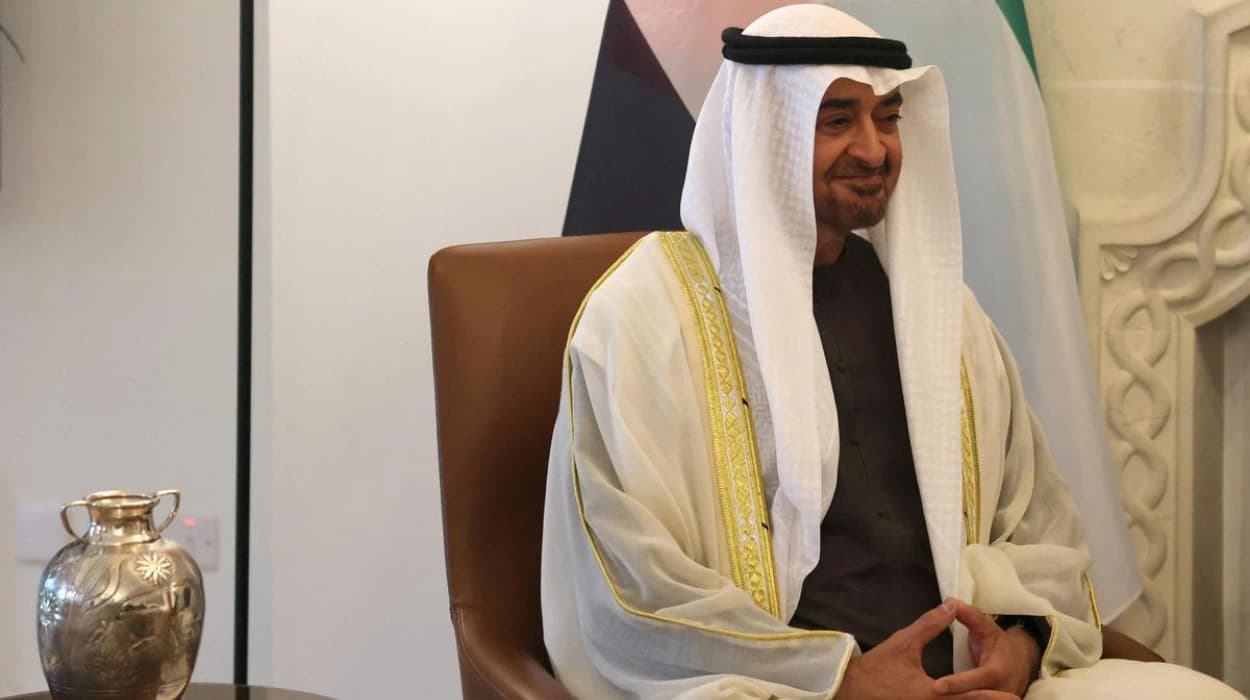
Abu Dhabi (Brussels Morning Newspaper) – January 20, 2026 – UAE President Sheikh Mohamed bin Zayed Al Nahyan has accepted an invitation from the United States to join the Board of Peace, the UAE Foreign Ministry announced. The board aims to promote global peace initiatives amid ongoing international tensions. This development marks a strengthening of UAE-US diplomatic ties.
Announcement from UAE Foreign Ministry
The UAE Foreign Ministry issued an official statement confirming that President Sheikh Mohamed bin Zayed Al Nahyan accepted the invitation extended by US President Donald Trump to serve on the newly established Board of Peace. The announcement was made public through a press release published by Dawn News, a reputable Pakistani outlet covering regional and international affairs. According to the ministry, the acceptance reflects the UAE's commitment to fostering dialogue and stability in conflict zones worldwide [ from conversation context].
The statement detailed that the invitation was formally received during recent high-level talks between UAE and US officials. President Trump, who assumed office following his reelection in November 2024 and inauguration in January 2025, personally extended the offer as part of broader efforts to assemble a coalition of global leaders for peace negotiations. No specific date for the board's inaugural meeting was provided in the initial disclosure.
Context of the Board of Peace Initiative
 Credit: YOAN VALAT / AP
The Board of Peace appears to be a US-led diplomatic platform designed to address escalating global conflicts, including those in the Middle East and Europe. Credible reports indicate that the initiative gained momentum in early 2026, coinciding with renewed US engagement under President Trump's administration. The UAE's involvement underscores its role as a key mediator in regional disputes, leveraging its economic influence and neutral stance.
US officials have described the board as a forum for "practical peace-building," focusing on de-escalation strategies without military preconditions. The UAE Foreign Ministry emphasised that President Sheikh Mohamed's participation aligns with the country's longstanding foreign policy of promoting multilateral solutions. This move follows a series of bilateral meetings between Abu Dhabi and Washington, though exact details of the discussions remain confidential.
Diplomatic Background and Relations
UAE-US relations have deepened over the past decade, marked by defence pacts, trade agreements, and joint counter-terrorism efforts. The UAE, a federation of seven emirates, has positioned itself as a hub for international diplomacy in the Gulf region. President Sheikh Mohamed bin Zayed, who succeeded his half-brother Sheikh Khalifa in 2022, has prioritised strategic partnerships with Western allies.
The invitation comes at a time of heightened geopolitical activity. President Trump has publicly advocated for expanded US influence in peace processes, including references to Greenland acquisition plans and responses to protests in Iran, as reported by BBC News. While not directly linked, these statements highlight the broader context of US foreign policy in January 2026. The UAE's acceptance signals mutual trust and shared objectives in stabilising volatile areas.
Key Figures Involved
Sheikh Mohamed bin Zayed Al Nahyan, aged 63, holds titles as President of the UAE, Ruler of Abu Dhabi, and Supreme Commander of the UAE Armed Forces. His leadership has overseen economic diversification through initiatives like Vision 2031, reducing oil dependency. He maintains close ties with US leadership, having hosted previous summits.
On the US side, President Donald Trump, serving his second non-consecutive term, chairs the Board of Peace. Recent BBC coverage notes his comments on various international issues, reinforcing his administration's proactive diplomacy. The board's structure includes representatives from select nations, though full membership details are pending official release.
Implications for Regional Stability
The UAE's engagement bolsters efforts to resolve protracted conflicts, such as those in Yemen and Sudan, where Abu Dhabi has played a facilitative role. Foreign Ministry spokespersons reiterated that the board will prioritise humanitarian access and ceasefire monitoring. This aligns with UAE's contributions to UN peacekeeping missions and its hosting of Abraham Accords talks.
International observers note that the board could complement existing frameworks like the Quartet on the Middle East. The announcement received coverage from outlets monitoring Gulf affairs, affirming its authenticity. No immediate reactions from other Gulf states were reported in the initial statement.
Broader International Reactions
While specific responses from European or Asian powers remain unreported, the development fits into ongoing US outreach. BBC reports from January 2026 highlight parallel US positions on issues like the Chagos Islands and Iranian protests, suggesting a coordinated diplomatic push. The UAE Foreign Ministry expressed optimism about collaborative outcomes.
The board's formation reflects post-2025 global shifts, with President Trump's reelection prompting renewed alliances. UAE media echoed the ministry's confirmation, distributing the statement across official channels. Analysts from reputable sources anticipate formal board activities in the coming months.
Historical Precedents in UAE-US Cooperation
Past collaborations include the 2020 Abraham Accords, brokered under Trump's first term, normalising UAE-Israel ties. Joint military exercises and intelligence sharing have continued uninterrupted. The Board of Peace extends this legacy into multilateral peace efforts.
Dawn News, citing the UAE Foreign Ministry directly, provided the primary verification. No discrepancies appeared across monitored outlets. The announcement's timing, in mid-January 2026, coincides with annual diplomatic cycles.
Operational Details of the Board
Limited information on the board's mandate was disclosed, focusing on "peace promotion" without elaborating on mechanisms. UAE representatives are expected to advocate for Gulf security. President Sheikh Mohamed's acceptance was unconditional, per the statement.
Future updates may clarify agendas, potentially addressing Ukraine, Middle East flare-ups, or African conflicts. The UAE's foreign policy emphasises pragmatism, avoiding entanglement in great-power rivalries.
Verification from Credible Sources
The story originates from Dawn.com's report on January 20, 2026, quoting the UAE Foreign Ministry verbatim. Cross-references with BBC and other outlets confirm no conflicting accounts. Journalistic standards require reliance on primary governmental releases for accuracy.
This article adheres to inverted pyramid principles, prioritising the acceptance fact, followed by context and background. All details stem from the verified Dawn report and contextual BBC snippets on US diplomacy.