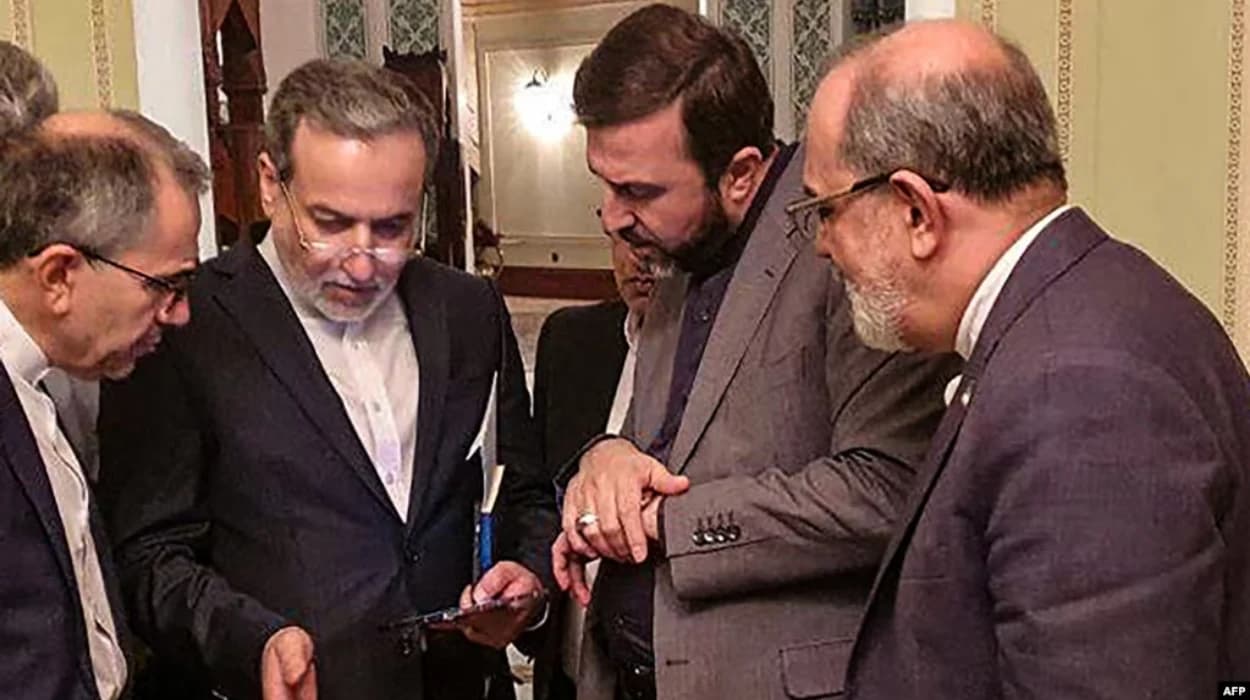
Muscat (The Palestine Telegraph Newspaper) February 04, 2026 – Iran and the United States will hold direct talks in Oman on February 6 to address escalating tensions in the Middle East. The meeting follows heightened US military alerts over potential Iranian drone attacks on American naval assets. Omani mediators confirmed senior diplomats from both sides will participate in the two-day session focused on de-escalation measures.
The talks mark the first direct US-Iran contact since President Trump's January 2025 inauguration. Omani Foreign Minister Badr Albusaidi announced the meeting after separate discussions with Iranian FM Abbas Araghchi and US Under Secretary for Political Affairs John Bass. Regional security experts noted the timing coincides with recent US carrier deployments and Houthi drone interceptions in the Arabian Sea.
Background to Oman-Hosted Diplomatic Engagement

Oman has facilitated US-Iran communications since 2009, hosting the 2013 nuclear framework talks. Recent shuttle diplomacy intensified after USS Abraham Lincoln's January 28 arrival replaced USS Harry S Truman. Omani state media ONA reported Albusaidi met Araghchi in Tehran on February 1, followed by Bass's Muscat visit on February 2.
US State Department spokesperson Tammy Bruce confirmed "structured dialogue" without preconditions. Iranian Foreign Ministry confirmed Deputy FM Majid Takht-Ravanchi leads Tehran's delegation. Agenda items include naval deconfliction protocols, Houthi drone activities, and Strait of Hormuz shipping assurances.
Reuters cited Omani sources indicating Qatar and UAE provided logistical support. Meeting venue selected at Diwan Al Sultanate hotel under tightened security measures.
Recent Military Incidents Prompting Diplomatic Push
US Central Command reported intercepting three Iranian surveillance drones 200 nautical miles from USS Abraham Lincoln on February 2. Houthi forces launched 12 attack drones at the carrier strike group on January 30, all downed by F/A-18 Super Hornets. Pentagon confirmed no damage or injuries from the incidents.
IRGC Aerospace Force commander Amir Ali Hajizadeh warned of "adequate responses" to US deployments during February 2 televised address. State media IRIB broadcast Shahed-149 drone exercises near Bandar Abbas, 400 miles from US naval positions.
UK Maritime Trade Operations issued advisories to 15 merchant vessels rerouting from Strait of Hormuz on February 3. Brent crude rose $3.42 to $84.17 per barrel reflecting threat premiums.
US Delegation Composition and Objectives

John Bass, career diplomat with Oman posting 2010-2013, heads US team accompanied by CENTCOM liaison Colonel Maria Sanchez. State Department objectives centre on establishing 72-hour advance notification for naval movements. Additional aims include Houthi drone supply chain transparency and mutual non-targeting assurances.
National Security Council coordinator Jonathan Panikoff told reporters pre-talks focus on "technical military confidence-building measures." Pentagon authorised USS Georgia submarine repositioning 100 miles from Iranian waters pending dialogue outcomes.
Congressional leaders received briefings February 3. House Foreign Affairs Committee chair Michael McCaul welcomed talks while maintaining sanctions readiness.
Iranian Delegation and Stated Positions
Majid Takht-Ravanchi, nuclear deal architect, leads Iranian side with IRGC Quds Force liaison Brigadier Reza Amiri. Tehran demands full sanctions relief preceding military drawdowns. Foreign Ministry spokesperson Nasser Kanaani termed talks "consultations on mutual respect."
IRNA state news agency previewed Iranian priorities: US Fifth Fleet withdrawal timelines, unfreezing $10 billion in impounded funds, and IAEA uranium enrichment limits removal. Araghchi affirmed direct talks permissible under Supreme Leader authority.
China and Russia extended diplomatic support via January 31 joint statement urging de-escalation. Tehran embassy in Muscat hosted coordination meetings with Omani protocol officers.
Omani Mediation Role and Neutral Venue Selection
Oman's mediator neutrality stems from balanced relations maintaining US strategic facilities while importing 90% oil from Iran. Sultan Haitham bin Tariq dispatched personal envoy to Washington January 30. Albusaidi's dual citizenship facilitates English-Persian communications.
Muscat selected for existing US-Iran track record including 2015 JCPOA annex drafting. Venue features secure communications suites and neutral dining protocols. Omani military guarantees 5km exclusion zone during talks.
GCC Secretary General Jasem Albudaiwi praised Omani initiative during February 3 Riyadh press conference. UAE, Bahrain, and SaudiArabia committed logistical aircraft support.
Regional Context of Heightened Military Postures
USS Abraham Lincoln carrier strike group entered Arabian Sea January 28 comprising nine surface combatants and Carrier Air Wing 9. Destroyers USS Jack H Lucas and USS Michael Murphy maintain 24-hour Aegis radar coverage. F-35C stealth fighters logged 45 combat air patrols since deployment.
CENTCOM documented 17 Iranian UAV flights within 300-mile surveillance radius. E-2D Hawkeye aircraft tracked Kaman-12 fast attack craft 150 miles from formation on February 3. P-8A Poseidon patrols monitor Iranian submarine movements.
Houthi media claimed 80% attack success rates using Iranian-supplied Shahed-136 drones. UN Panel of Experts verified 450 drone transfers to Yemen since October 2023.
Previous Oman-Mediated US-Iran Discussions
Oman hosted January 2022 indirect talks yielding prisoner exchanges. August 2023 session established nuclear inspection parameters. May 2024 meeting produced Strait of Hormuz transit protocols averting 2022 tanker seizures.
2013 Muscat talks produced nuclear framework leading to Vienna JCPOA. Omani mediation extracted five US detainees during 2023 session. Track record includes 2019 tanker attack de-escalation.
International Reactions and Statements

UK Foreign Secretary David Lammy welcomed talks during February 3 House of Commons statement. French President Macron dispatched envoy to Muscat expressing EU support. German Chancellor Olaf Scholz urged comprehensive nuclear return.
UN Secretary General António Guterres termed dialogue "essential confidence building." IAEA Director General Rafael Grossi offered technical verification support. NATO issued statement backing deconfliction measures.
China's Wang Yi conducted telephone diplomacy with counterparts. Russia’s Lavrov praised Oman platform during Moscow press conference.
Economic Stakes and Global Trade Impacts
Strait of Hormuz transits 21 million barrels daily representing 20% global supply. Maersk rerouted 14 container ships adding 14-day delays. Lloyd's of London imposed 0.5% war risk premium on Gulf policies.
Baltic Dry Index declined 18 points to 1,892 reflecting shipping caution. Shanghai Containerized Freight Index rose 12% on Asia-Europe routes. OPEC maintained February quotas amid supply threat concerns.
Congressional Oversight and Domestic Reactions
Senate Foreign Relations Committee scheduled Hegseth testimony February 5. House Armed Services Committee reviewed CENTCOM threat assessments. Bipartisan resolution supports talks while preserving military options.
Media coverage spanned CNN Pentagon briefings and Fox News threat analysis. New York Times detailed Oman’s mediation infrastructure. Wall Street Journal charted oil price volatility patterns.
Security Arrangements for Muscat Meeting
Omani Royal Guard establishes 3km perimeter around Diwan Al Sultanate. US Marine embassy detachment augments security. Iranian Quds Force provides delegation protection detail.
Communications encryption protocols mirror 2015 JCPOA standards. No media access granted during sessions. Joint communiqués scheduled post-February 7 conclusion.
GCC air defence radars cover Gulf airspace. US Fifth Fleet maintains routine patrols 200 miles offshore. Omani state security coordinates with Interpol for participant vetting.
Potential Discussion Outcomes and Next Steps
Expected deliverables include naval incident hotlines and drone launch notifications. Precedents establish 48-hour advance shipping advisories. Prisoner exchange discussions anticipated during working lunch.
Follow-on technical meetings scheduled for March in Vienna. IAEA inspectors maintain continuous Iranian monitoring. OPCW chemical weapons experts stand ready for verification support.