Davos (The Palestine Telegraph News) January 20, 2026 – Industry leaders at the World Economic Forum (WEF) Annual Meeting warned that artificial intelligence (AI) and data centre growth demand $4 trillion in annual global energy investments. The figure covers grids, data centres, and all energy sources to meet rising electricity needs. Discussions at the Davos Energy Breakfast emphasised pragmatic strategies for energy security and resilience.
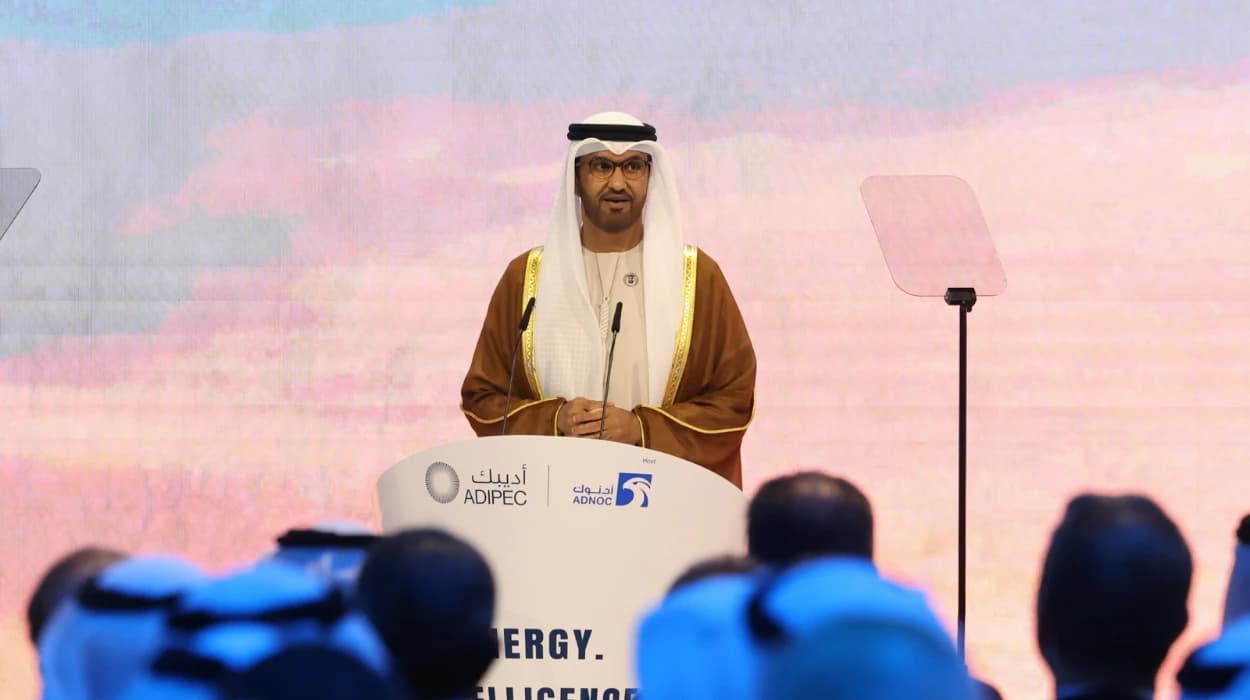
Sultan Al Jaber, UAE Minister of Industry and Advanced Technology and ADNOC CEO, highlighted the need during earlier conferences, reiterated at Davos. Participants at the “New Energy Agenda: Access, Resilience and AI” roundtable agreed AI-driven demand tests global infrastructure.
The International Energy Agency (IEA) projects data centre electricity consumption to exceed 1,000 TWh by 2030, surpassing current usage in major economies.
Davos Energy Breakfast Key Discussions
 Credit: REUTERS
Fatima Al Jafar, ADNOC Managing Director, and Musabbeh Al Kaabi, ADNOC Upstream CEO, co-hosted the Davos Energy Breakfast on January 19. Leaders from government, business, and academia addressed AI's impact on energy systems.
Al Jafar stated: “Rapidly accelerating electricity demand from artificial intelligence and data centres is expected to push global data-centre power consumption beyond 1,000 terawatt-hours by 2030.” She called for “all-of-the-above” energy strategies ensuring reliability, emissions reduction, and growth.
Annual global electricity demand growth now reaches nearly 3.5% due to AI and other factors. Fossil fuels may supply 40% of new demand through 2030.
Projections on AI and Data Centre Energy Use
 Credit: bloomberg.com
By 2030, data centres could consume 945 TWh, more than Germany and France combined, doubling from 415 TWh in 2024. AI may drive over 20% of total electricity demand growth.
Global AI spending will exceed $2 trillion in 2026, heightening the energy nexus. Renewable integration is essential for energy security, costs, and carbon mitigation.
WEF's Roberto Bocca stressed energy security as a national priority amid AI growth. Private capital flows into nuclear power support efficiency gains.
Calls for Infrastructure Expansion
Al Jaber noted: “You can’t run tomorrow’s economy on yesterday’s grid.” Investments must revamp power grids and develop resources for data booms.
Middle East expansions strengthen resilient energy systems. UAE leads in pragmatic policies and partnerships for jobs, growth, and competitiveness.
India advances energy transition, contributing to global oil supply stability.
Microsoft's Nadella on Energy in AI Race
 Credit: Justin Sullivan | Getty Images
Microsoft CEO Satya Nadella stated at Davos that energy costs will determine AI race winners. Countries with affordable, reliable energy gain advantages.
AI offers efficiency improvements across sectors. National strategies must prioritise supply amid surging demand.
WEF Annual Meeting Context
The WEF Annual Meeting runs from January 19-23 in Davos under “A Spirit of Dialogue” theme. Leaders address geopolitical and macroeconomic challenges.
Energy discussions link competitiveness, resilience, and investments. AI's energy paradox requires value chain collaboration.
Global electricity demand forecasts reflect AI's role in 3.5% annual growth.
Historical Energy Investment Trends
Large oil producers have urged supply investments for years. AI accelerates needs beyond oil glut concerns.
ADNOC and UAE officials promote bold partnerships at events like ADIPEC. Davos reinforces these calls.
Regional Responses to AI Demand
UAE invests in accessible, resilient systems. Planned MiddleEast expansions meet digital growth.
India's transition progress aids global stability. Private nuclear investments rise.