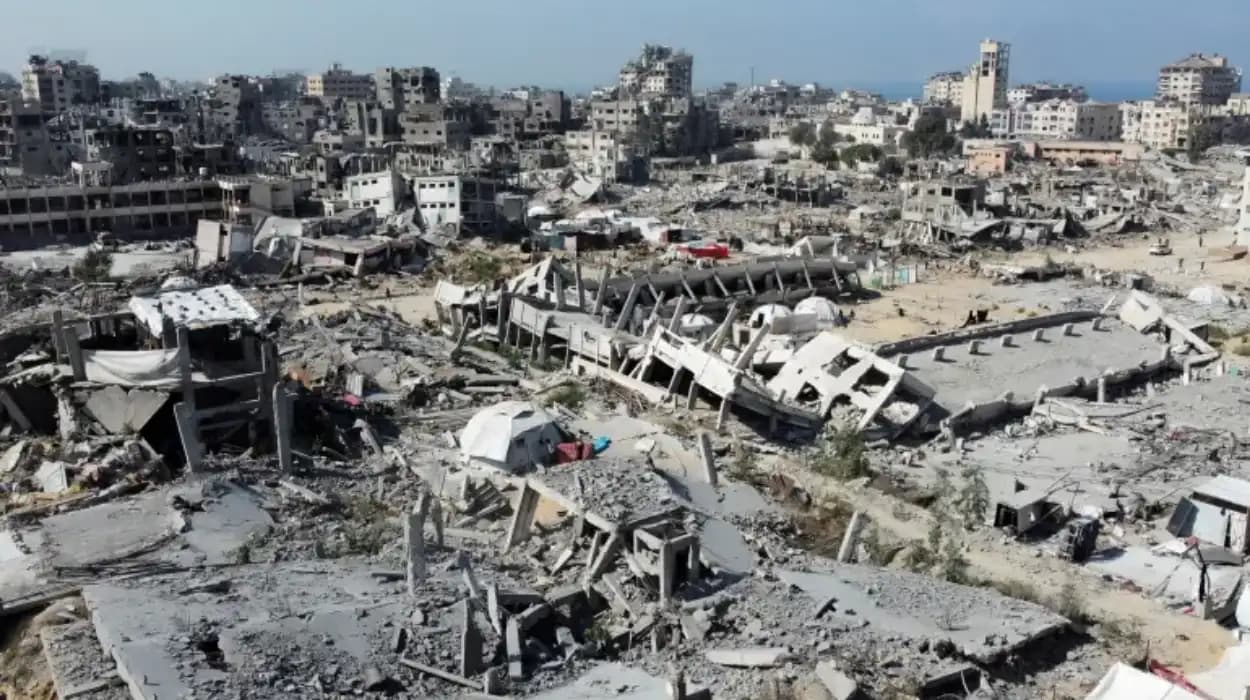
Gaza (The Palestine Telegraph Newspaper) 30 January 2026 – Israeli airstrikes in Gaza have killed at least five Palestinians, including civilians, despite an ongoing ceasefire agreement aimed at halting hostilities. The strikes targeted areas in Gaza City and Khan Younis, with local health authorities reporting casualties amid claims of renewed militant activity. This development raises concerns over the ceasefire's stability following recent negotiations.
The Israeli Defense Forces (IDF) stated the strikes responded to rocket fire from Gaza, while Palestinian officials described them as violations of the truce brokered by international mediators.
Details of the Latest Strikes and Casualties
Israeli warplanes conducted multiple airstrikes on 29 January 2026, hitting residential buildings and open areas in northern and central Gaza. Gaza's Health Ministry reported five deaths, comprising two women and three children, with over 20 wounded.
In Gaza City’s Shuja’iyya neighbourhood, a strike demolished a house, killing three family members. Another attack in Khan Younis targeted a suspected militant site, claiming two lives. Rescue teams from the Palestinian Civil Defence recovered bodies from rubble, with hospitals overwhelmed by injuries from shrapnel and collapse.
The IDF confirmed three precision strikes, asserting they eliminated Hamas operatives planning attacks. No Israeli casualties were reported from alleged rocket launches that preceded the response.
Ceasefire Background and Recent Negotiations

The ceasefire, effective from 15 January 2026, followed Qatar-mediated talks between Israel and Hamas after 15 months of conflict. It included phased hostage releases, aid surges, and withdrawal timelines for IDF forces from parts of Gaza.
Previous violations marred the truce, with tit-for-tat fire in late December 2025. Hamas accused Israel of breaching terms by maintaining troops near aid corridors, while Israel pointed to tunnel activities. UN observers monitored compliance, noting over 300 minor incidents since inception.
Egypt and the US facilitated extensions, with the latest running through February 2026. Hamas released 15 hostages last week, prompting Israel to allow 500 aid trucks daily.
IDF Statements on Operational Justifications
IDF spokesperson Brigadier General Effie Defrin said the strikes targeted "terrorist infrastructure" after detecting rocket preparations. Drones and jets hit command centres in Shuja’iyya and a weapons cache in Khan Younis.
Israel’s military reported neutralising two Hamas commanders responsible for October 2023 attacks. Ground incursions paused under ceasefire, but surveillance flights continued over Gaza.
Prime Minister Benjamin Netanyahu addressed the Knesset on 29 January, reaffirming commitment to security while upholding the truce. He noted 1,200 Israeli deaths since the war began and 250 hostages still held.
Palestinian Authority and Hamas Responses
Hamas spokesperson Sami Abu Zuhri condemned the strikes as "deliberate escalation," urging mediators to intervene. Gaza Health Ministry official Ashraf al-Qudra detailed the civilian toll, calling for international probes.
The Palestinian Authority in Ramallah criticised Israel, with President Mahmoud Abbas demanding UN Security Council action. Protests erupted in West Bank cities like Ramallah and Nablus, drawing hundreds.
In Gaza, displaced families fled strike sites, exacerbating a humanitarian crisis with 1.9 million uprooted. Aid agencies reported shortages despite increased convoys.
International Reactions and Diplomatic Efforts
US Secretary of State Antony Blinken urged restraint via statement, affirming support for Israel’s defence while pressing for ceasefire adherence. The White House coordinated with Qatar on de-escalation.
UN Secretary-General Antonio Guterres expressed alarm, dispatching envoy Tor Wennesland to the region. EU foreign ministers convened virtually, calling for investigations into violations.
Qatar’s Prime Minister Sheikh Mohammed bin Abdulrahman hailed the truce as fragile, pledging continued mediation. Egypt reinforced border troops to prevent smuggling.
Arab League foreign ministers met in Cairo, issuing a resolution blaming Israel and demanding aid access.
Humanitarian Impact in Gaza
The World Health Organization reported Gaza’s hospitals at 70% capacity post-strikes, with Al-Shifa and Nasser facilities treating blast victims. Fuel shortages threatened generator-dependent wards.
UNRWA noted 90,000 tents distributed, but winter rains flooded camps in Rafah. Famine warnings persisted for northern Gaza, where 300,000 faced acute shortages.
The International Committee of the Red Cross evacuated wounded to Jordan, documenting 45,000 total Palestinian deaths since October 2023.
Historical Context of the Conflict

The war erupted on 7 October 2023, when Hamas launched attacks killing 1,200 Israelis and abducting 250. Israel’s response levelled swathes of Gaza, displacing populations and destroying infrastructure.
Multiple ceasefires collapsed previously, including November 2023 and May 2025 truces. Casualty figures vary: Gaza authorities report 45,000 deaths; Israel verifies 17,000 militants killed.
Hostage talks advanced slowly, with 105 freed in phases. Remaining captives include soldiers and Thai workers.
Regional Security Dynamics
Hezbollah exchanges with Israel along Lebanon ceased under parallel truce, but tensions simmer. Yemen’s Houthis claimed solidarity rocket fire, prompting US naval intercepts.
Iran denied directing proxies, focusing on nuclear talks. Jordan intercepted drones from Iraq amid heightened alerts.
Israeli security cabinet approved the strikes unanimously, linking them to Hamas non-compliance on demilitarisation.
Ongoing Monitoring and Future Prospects
Ceasefire technical committees, comprising Israel, Hamas, US, and Egypt, scheduled emergency talks. Qatar hosted delegations on 30 January to address violations.
Satellite imagery showed IDF repositioning southwards, vacating northern buffer zones as agreed. Hamas pledged no offensive actions pending investigations.
International donors pledged $2 billion at recent London conference for Gaza reconstruction, contingent on sustained peace.
Aid volumes reached 800 trucks on 29 January, delivering flour, medicine, and water. However, distribution halted in strike zones.