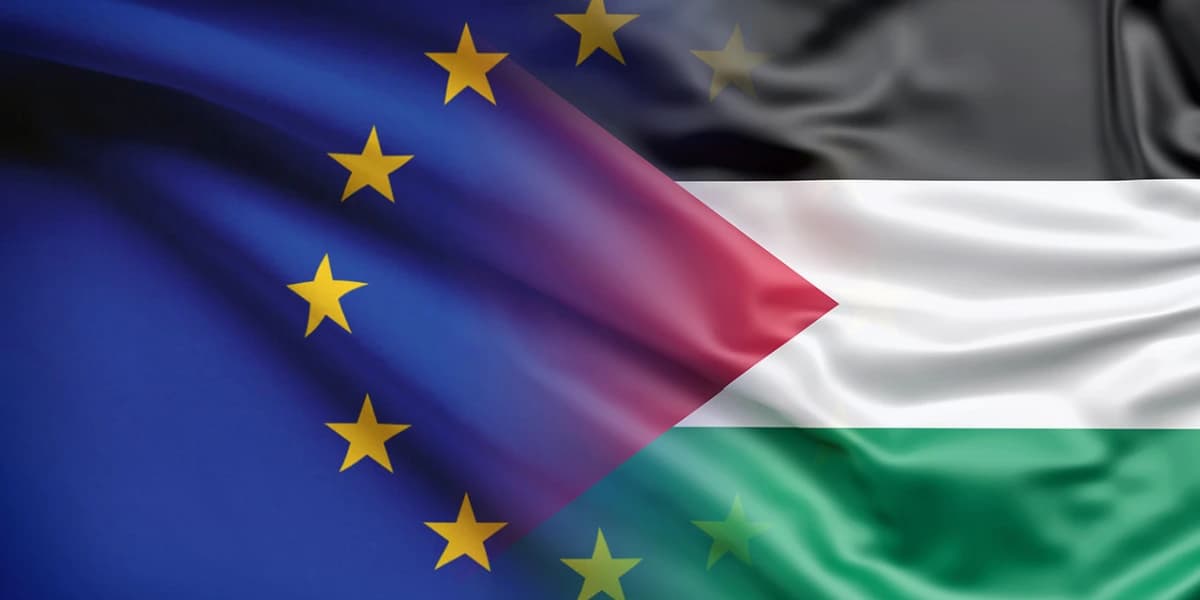
The European Union (EU) has long been one of the largest international donors to the Palestinian people and their institutions. Its assistance spans humanitarian relief, development aid, economic resilience programmes, and governance support. In recent years, the urgency of EU aid to the occupied Palestinian territories—including the Gaza Strip, the West Bank, and East Jerusalem—has increased significantly in response to evolving humanitarian and political conditions. The EU’s engagement reflects both a humanitarian commitment and a strategic approach to supporting stability, governance, and long‑term development in the region.
Scope and Key Figures of EU Assistance
The EU’s aid to Palestine is extensive, combining immediate humanitarian relief with long‑term development and institutional support to address both urgent needs and sustainable growth.
Humanitarian Aid
Since 2023, the “Team Europe” (the EU plus its Member States) humanitarian support to the Palestinian territories has reached approximately €1.48 billion. In 2025, the EU pledged an additional €50 million in humanitarian emergency assistance, bringing the total to about €220 million for the year. Recent humanitarian packages have brought the total EU humanitarian aid to Gaza alone since 2023 to over €450 million.
Humanitarian aid focuses on food, healthcare, water, sanitation, hygiene, shelter, and protection for vulnerable populations, aiming to save lives and alleviate immediate suffering in conflict‑affected areas. For example, the EU’s humanitarian communications team posted via its official X account: 2/2The EU condemns settler violence and calls on Israel to take decisive steps to ensure accountability and protect the Palestinian civilian population in line with its obligations under international law.
“Extending our heartfelt condolences … This shocking incident must be swiftly and fully investigated by the relevant authorities.”: 2/2The EU condemns settler violence and calls on Israel to take decisive steps to ensure accountability and protect the Palestinian civilian population in line with its obligations under international law.
Development, Governance, and Economic Resilience
Under the EU’s “European Joint Strategy” for 2021‑2024, approximately €1.18 billion was planned for Palestinian assistance, with over half already approved. In 2025, a multi‑annual support programme worth up to €1.6 billion was launched for Palestinian recovery and resilience.
A key component of this programme is a €400 million financing facility for Palestinian micro, small, and medium‑sized enterprises to stimulate economic growth and job creation.
In 2022, the EU allocated €199.2 million for the Palestinian Authority’s social allowances, salaries, and pensions, alongside €97 million to the United Nations Relief and Works Agency for Palestine Refugees in the Near East (UNRWA), totalling €296 million for that year.
Institutional and Budget Support
The EU also provides institutional support through mechanisms such as PEGASE, which funds civil servant salaries, pensions, social allowances, and institutional capacity‑building. For instance, in 2024, the EU disbursed €25 million to the Palestinian Authority and €16 million to UNRWA as part of this mechanism. This institutional support ensures that Palestinian authorities can continue functioning effectively, maintain essential public services, and implement reforms critical to long‑term stability.
Purposes and Focus Areas
EU aid is designed to achieve multiple objectives:
Humanitarian relief: Providing food, healthcare, water, sanitation, hygiene, shelter, and protection for vulnerable populations.
Governance and institutional capacity: Strengthening the Palestinian Authority’s ability to deliver public services and maintain institutional frameworks.
Economic resilience: Supporting job creation and improving access to finance for small businesses in an environment constrained by conflict and movement restrictions.
Development and infrastructure: Investing in social sectors like education, health, and infrastructure in East Jerusalem, the West Bank, and Gaza.
Two‑state solution alignment: EU assistance is linked to the broader objective of a viable Palestinian state alongside Israel, with institutional support contributing to this goal.
Prominent Supporters of EU Aid
Several notable figures and EU officials have publicly emphasised the importance of EU aid to Palestine:
Josep Borrell, EU High Representative for Foreign Affairs and Security Policy, stated:
“Supporting the Palestinian people is not only a humanitarian obligation; it is essential for stability and the prospects of peace in the region.
Ursula von der Leyen, President of the European Commission, noted:
“The European Union will continue to provide substantial aid to ensure Palestinians have access to healthcare, education, and basic services, even in the most challenging circumstances.”
Tor Wennesland, UN Special Coordinator for the Middle East Peace Process, commented:
“EU assistance remains a critical lifeline for Palestinians, particularly in Gaza, where humanitarian needs are immense and urgent.”
These statements reflect widespread recognition among international policymakers that aid is essential for humanitarian and developmental purposes.
Benefits and Intended Impacts
The EU’s aid provides multiple benefits:
Alleviating suffering: Humanitarian aid addresses immediate needs in conflict‑affected areas.
Stabilising fragile systems: Support for Palestinian institutions enhances governance capacity and public service delivery.
Supporting economic growth: Financial programmes for small businesses promote employment and livelihoods.
Building long‑term prospects: Development programmes contribute to infrastructure, education, and health improvements.
Political engagement: Aid allows the EU to exercise diplomatic influence and integrate assistance with its broader foreign‑policy frames.
Challenges and Criticisms
Despite its scale, EU aid faces several challenges:
Access and delivery constraints
Humanitarian aid often encounters logistical, administrative, and security obstacles. Delivery in Gaza is affected by blockades, clearance delays, and limited infrastructure.
Governance, oversight, and conditionality
EU aid to the Palestinian Authority is conditional on governance reforms, transparency, and credible institutional frameworks. Critics note that political fragmentation and institutional fragility may limit aid effectiveness.
Political and conflict risks
The volatile security situation, recurrent conflict, occupation realities, and movement restrictions shape the operating environment, making aid delivery complex.
Sustainability and long‑term impact
While humanitarian aid addresses immediate needs, critics question whether development programmes can achieve sustainable structural change amid unresolved political issues.
Transparency and reporting
Although the EU publishes figures and programme updates, monitoring and measuring outcomes on the ground remain challenging due to the difficult operating environment.
Recent Developments
In December 2023, the EU announced an initial humanitarian aid contribution of €125 million for Palestinians for 2024.
In September 2025, an additional €50 million in emergency aid was released in response to the deteriorating humanitarian situation in Gaza and the West Bank.
In April 2025, the EU launched a three‑year support package worth up to €1.6 billion covering 2025‑2027 for Palestinian recovery, resilience, and institutional support.
The €400 million facility for small and medium enterprises is part of this broader effort to strengthen economic resilience.
Summary and Outlook
The EU’s aid to the Palestinian territories is extensive and multifaceted, encompassing humanitarian relief, development programmes, budgetary support, and economic initiatives. Its approach combines immediate crisis response with longer‑term investments in institutions and economic resilience.
However, the environment remains challenging due to recurrent conflict, structural constraints, political fragmentation, and governance challenges. Delivering aid effectively depends not only on the resources mobilised but also on the political, security, and institutional landscape.
Looking forward, the EU will need to maintain a careful balance between humanitarian and development goals, ensure transparency and oversight, adapt to evolving geopolitical dynamics, and continuously monitor the effectiveness of aid programmes. While EU assistance addresses immediate needs and strengthens institutions, its ultimate impact will depend on broader regional and political developments.
Frequently Asked Questions
1. How much aid does the EU provide to Palestine annually?
The EU provides both humanitarian and development aid, totalling several hundred million euros per year, with emergency packages for urgent crises adding further support.
2. Which areas receive the most EU aid in Palestine?
Aid is primarily directed to Gaza, the West Bank, and East Jerusalem, focusing on humanitarian relief, social services, infrastructure, and economic development.
3. Who oversees the use of EU aid in Palestine?
The European Commission and EU delegations in the region, alongside partner organisations and the Palestinian Authority, monitor and manage the delivery of assistance.
4. Why does the EU provide aid to Palestine?
Aid aims to alleviate human suffering, support institutional capacity, strengthen economic resilience, and contribute to the long‑term prospects of a peaceful resolution.
5. Are there conditions attached to EU aid?
Yes. EU aid often comes with requirements for governance, transparency, accountability, and institutional reforms to ensure effective and responsible use of resources.