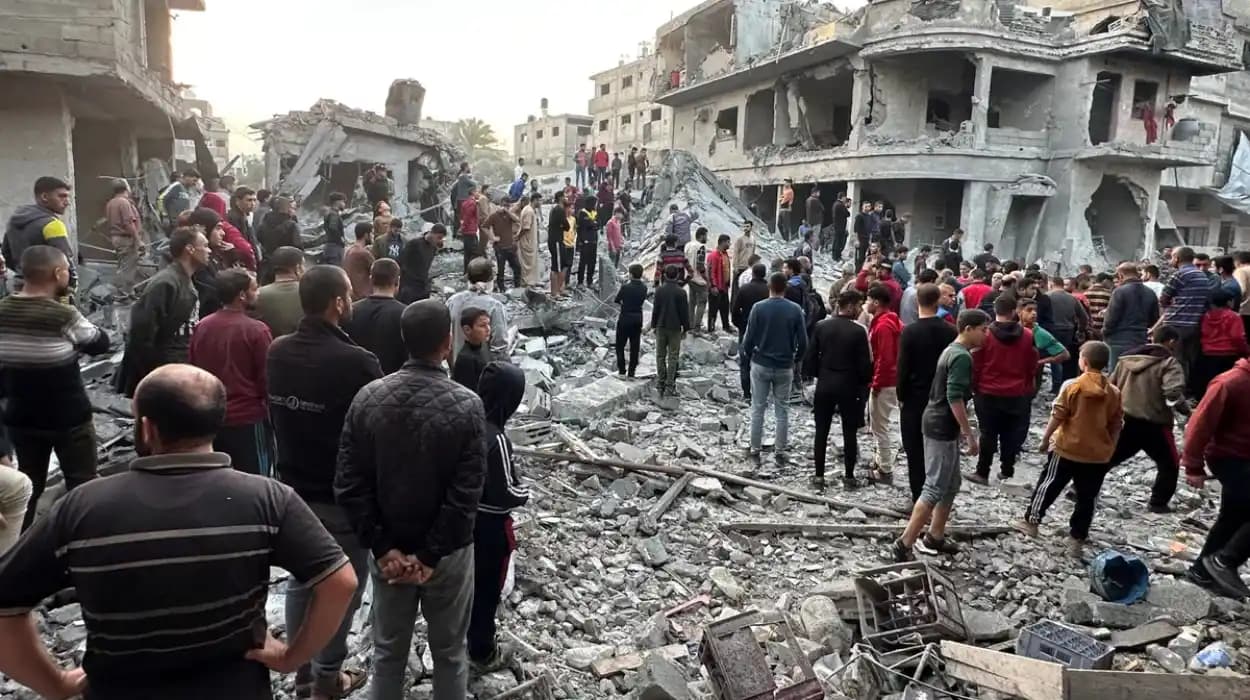
Gaza (The Palestine Telegraph Newspaper) January 31, 2026 – Gaza’s Civil Defence agency says at least 22 people have been killed in a new wave of Israeli airstrikes across the enclave, as Israel’s military continues operations it says are directed against armed groups and military infrastructure. Local emergency services report multiple residential buildings hit and ongoing efforts to recover people from under the rubble. Israel’s army states it is targeting Hamas and other factions, while international agencies warn of the growing toll on civilians and vital services.
The latest strikes come amid continued hostilities and no comprehensive ceasefire in place, with densely populated neighbourhoods again bearing the brunt of aerial bombardment. Hospitals already struggling with shortages of fuel, equipment and medicines are treating dozens of wounded, including women and children, according to medical officials in the territory. International humanitarian organisations are renewing calls for the protection of civilians and unobstructed access for aid.
Gaza Civil Defence Details Casualties and Damage From Strikes
Gaza’s Civil Defence service reported that 22 people were confirmed dead following a series of strikes on residential areas and other locations in different parts of the Strip. Rescue teams said the death toll could rise as crews continued to search collapsed structures and dig through debris to reach those believed to be trapped. Emergency responders described scenes of destroyed apartments, damaged streets and vehicles, and families attempting to locate missing relatives.
Local authorities indicated that several of the strikes hit multi-storey residential buildings, leading to significant structural collapse and fire. Civil Defence personnel said they had to use heavy machinery and manual excavation to reach lower floors. Witness accounts relayed by local media described explosions followed by the rapid arrival of ambulances and fire services.
Medical sources in Gaza stated that the bodies of the dead and many wounded were taken to nearby hospitals, where doctors and nurses have been operating under pressure due to limited resources. Hospitals activated emergency plans to handle the influx, postponing non-urgent procedures to free up beds and staff. Health workers have appealed for additional supplies, including surgical equipment, anaesthetics and fuel for generators.

Israeli Military Cites Operations Against Armed Groups
The Israel Defense Forces (IDF) said in statements that its aircraft and artillery were striking what it described as militant targets across Gaza, including command centres, weapons storage sites and launch positions associated with Hamas and other armed factions. Military spokespeople said the attacks were part of ongoing operations aimed at preventing rocket fire and other attacks towards Israeli territory and degrading the capabilities of armed groups in the enclave.
The IDF typically states that it takes measures to limit civilian casualties, including issuing warnings in some cases before striking, but says that fighters embed themselves in residential areas and civilian infrastructure. In its latest updates, the military said several of the sites targeted were used to coordinate operations and store weapons, and that some individuals it described as operatives were among those hit. It did not immediately provide names or numbers of those it said were combatants.
Israeli authorities also reported continued security concerns near the Gaza perimeter, citing attempts to fire projectiles and alleged efforts to plan attacks against Israeli forces and communities. The strikes were framed as part of a broader campaign to maintain security and respond to previous incidents.
Hospitals and Health System Under Growing Strain
The reported deaths and injuries add further pressure to a health system that humanitarian agencies say has been repeatedly stretched by cycles of conflict, long-standing restrictions and resource shortages. Hospitals in Gaza rely heavily on generators due to limited and intermittent electricity supply, making consistent fuel deliveries critical for maintaining life-saving services.
Medical officials in the territory report that operating theatres and intensive care units are running at or near capacity in the wake of successive waves of casualties. In addition to treating trauma cases from recent strikes, staff are responsible for caring for patients with chronic and other serious conditions, such as cancer and kidney disease, which require regular treatment.
International health organisations have warned that disruption to electricity, water and sanitation systems can quickly exacerbate health risks, particularly in densely populated urban areas. Damage to roads and basic infrastructure can also slow ambulance movements and hinder the transport of supplies. Agencies have reiterated calls for the protection of medical facilities and personnel, in line with international humanitarian law.

Humanitarian Agencies Highlight Civilian Impact
Aid agencies and rights groups monitoring events in Gaza have expressed concern about the continued loss of civilian life and the cumulative impact on the territory’s roughly two million residents. They note that many of those affected by the latest strikes are already living in precarious conditions, with limited access to clean water, reliable electricity and employment.
Organisations working on the ground have reported that repeated displacement, property damage and trauma are affecting families’ ability to cope. In some cases, people whose homes have been damaged or destroyed have had to move in with relatives or seek temporary shelter in schools, mosques or other public buildings. Humanitarian workers argue that recurrent damage to housing and infrastructure, coupled with restrictions on the entry of construction materials, has slowed reconstruction and left many areas vulnerable when new hostilities erupt.
International agencies have also emphasised the importance of safe and sustained access for humanitarian convoys to deliver food, medical supplies, fuel and other essentials. They have urged all sides to facilitate rapid and unimpeded passage for aid and to respect the neutrality of humanitarian operations.
Regional and International Responses to Latest Violence
Regional governments and international organisations continue to call for de-escalation and adherence to international humanitarian law. Neighbouring countries, including Egypt and Qatar, have previously played roles in mediating temporary ceasefires or understandings aimed at halting hostilities between Israel and armed factions in Gaza. Officials in these states have urged restraint and emphasised the need to prevent further civilian casualties.
The United Nations and various member states have expressed concern over civilian deaths and reiterated that parties to the conflict must distinguish between civilian and military targets. Some have called for renewed diplomatic engagement to stabilise the situation and reduce the risk of a broader escalation. Statements from foreign ministries in several capitals have balanced references to Israel’s security concerns with appeals to protect civilians and infrastructure in Gaza.

International legal and human rights bodies continue to document incidents and collect information on potential violations committed by all parties. They have underscored that accountability and respect for legal obligations are essential for preventing further deterioration and for any eventual political process.