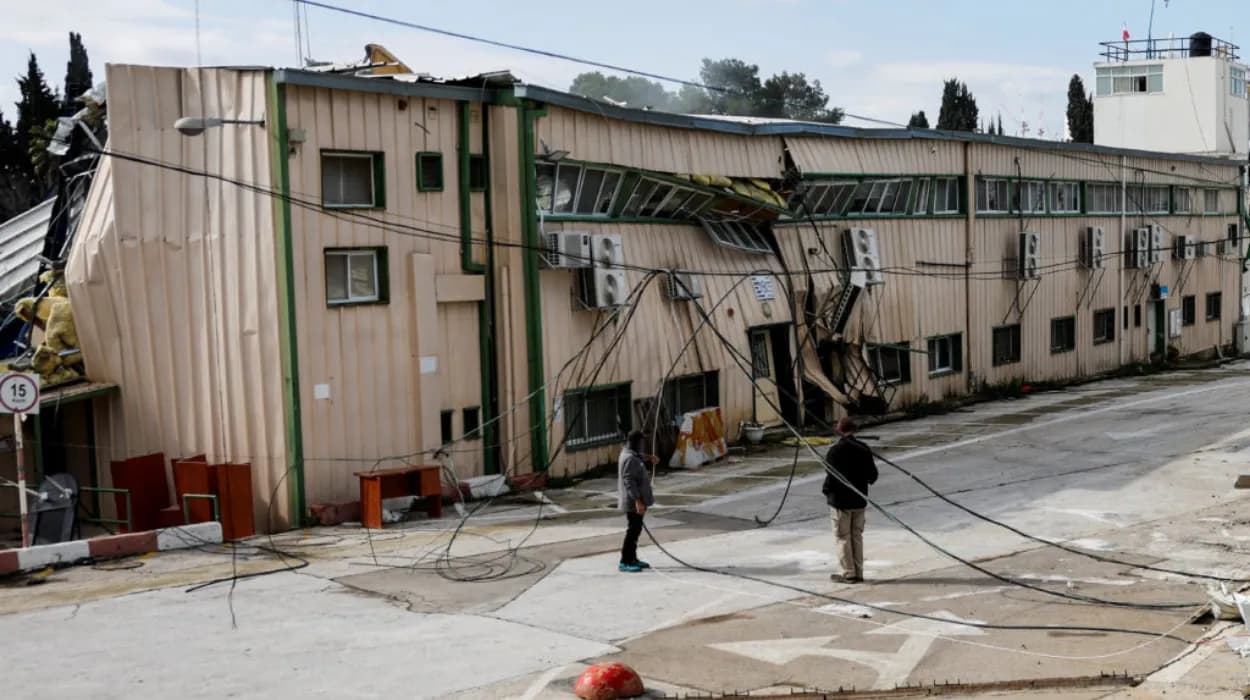
East Jerusalem (The Palestine Telegraph Newspaper) – 21 January 2026 – Israeli forces have demolished the United Nations Relief and Works Agency (UNRWA) headquarters compound in East Jerusalem, according to statements from UN officials and Palestinian authorities. The action took place early Wednesday morning following a series of prior notices and security operations at the site. The UN has described the demolition as a violation of international law protecting UN premises, while Israel maintains the move addresses unauthorised construction and security threats in the area.
The UNRWA compound, located in Sheikh Jarrah neighbourhood of occupied East Jerusalem, served as the agency’s regional headquarters responsible for operations across the West Bank, Gaza and Jordan. UNRWA Commissioner-General Philippe Lazzarini confirmed the demolition in a statement issued hours after the incident, noting that agency staff had been evacuated prior to the operation. Palestinian residents reported heavy machinery and security forces arriving at dawn, completing the demolition within several hours.
Sequence of events leading to UNRWA headquarters demolition
 Credit: LIA YEFIMOVICH / AFP
Israeli municipal authorities had issued multiple demolition orders against the UNRWA compound over preceding months, citing violations of local zoning regulations and building permits. The site, originally established in 1949 following the agency’s creation by UN General Assembly Resolution 302, expanded over decades to accommodate administrative offices, warehouses and staff facilities. Final notices were delivered last week, prompting partial evacuation of equipment and documents.
Witnesses described Israeli police cordoning off surrounding streets before bulldozers began razing structures, starting with outer perimeter buildings and progressing to the main headquarters block. UNRWA staff documented the process via photographs and video, which were later shared with international media. No injuries were reported, as the compound had been largely vacated following security advisories issued on Monday.
UNRWA response and immediate operational impacts
UNRWA leadership convened an emergency meeting in Amman to assess the situation and coordinate continuity measures. Commissioner-General Lazzarini stated that the agency maintains backup facilities across Jerusalem and the region, ensuring essential services continue uninterrupted. The demolished headquarters housed administrative functions including human resources, procurement and programme coordination for education, health and relief operations serving registered Palestinian refugees.
The agency reported transferring critical operations to alternate locations within hours of the demolition. UNRWA serves approximately 5.9 million registered refugees with education for 500,000 children, healthcare for 1.7 million patients annually and emergency assistance in conflict zones. Regional directors confirmed that field operations in Gaza, West Bank and neighbouring countries remain fully functional.
Israeli authorities’ stated rationale for the demolition action
 Credit: MOSTAFA ALKHAROUF / ANADOLU VIA AFP
Jerusalem Municipality officials explained the demolition as enforcement of building codes against structures lacking proper permits, a practice applied to numerous sites across the city. The municipality highlighted previous court rulings upholding demolition orders for the UNRWA compound, dating back to 2019 challenges. Security services cited intelligence regarding potential militant activity in the vicinity, though no specific incidents were linked directly to UNRWA operations.
Israel’s Foreign Ministry issued a statement noting that UN premises do not enjoy absolute immunity when violating host country laws, referencing similar actions against other international compounds. Military sources confirmed coordination between police, engineers and municipal inspectors to ensure structural safety during demolition. The site will remain under Israeli security control pending future zoning determinations.
International reactions to East Jerusalem UNRWA demolition
United Nations Secretary-General António Guterres called the demolition “unacceptable” and requested immediate access for UN inspectors to assess damage and recover materials. The UN Security Council scheduled emergency consultations following requests from several member states. European Union foreign policy chief Josep Borrell expressed concern over impacts on humanitarian operations, urging preservation of UN infrastructure.
Palestinian Authority President Mahmoud Abbas condemned the action as an escalation targeting international institutions supporting refugee rights. Foreign ministers from Arab League states issued a joint statement demanding UN General Assembly action to protect UNRWA operations. Jordan, host to UNRWA’s largest field operations, summoned the Israeli ambassador to protest the demolition.
Legal context surrounding UNRWA property in occupied territories
UNRWA operates under host country agreements granting privileges and immunities, including protection of premises, as codified in the 1946 Convention on the Privileges and Immunities of the United Nations. The agency’s presence in East Jerusalem stems from 1950s arrangements with Jordanian authorities, later contested following 1967 territorial changes. Multiple International Court of Justice advisory opinions affirm special protections for UN facilities in occupied territories.
Israeli courts have previously ruled on UNRWA property disputes, balancing municipal regulations against international obligations. The 2023 Jerusalem District Court decision upheld demolition orders while allowing appeals processes, which UNRWA pursued unsuccessfully. Legal experts note ongoing tensions between local enforcement and UN status agreements across multiple jurisdictions.
Historical background of the Sheikh Jarrah UNRWA compound
The East Jerusalem headquarters originated as a repurposed military barracks allocated to UNRWA shortly after the agency’s founding. Over seven decades, the compound evolved into a 12-building complex employing 120 staff and coordinating multi-million-dollar programmes. Key functions included emergency response planning, donor coordination and regional training centres for health workers and teachers.
The site gained prominence during periodic escalations, serving as a distribution hub for aid convoys and medical supplies. UNRWA invested over $20 million in upgrades since 2000, including solar power systems and reinforced bunkers. Demolition removes a central node in the agency’s regional architecture, established through successive UN budgets approved by member states.
Operational relocation plans and service continuity measures
UNRWA announced immediate relocation of headquarters functions to the agency’s Amman regional office and West Bank field facilities. Backup servers and document archives, maintained across multiple sites per standard protocol, ensure data integrity. Field directors in Gaza, Lebanon and Syria confirmed no disruptions to frontline services including schools, clinics and cash assistance programmes.
The agency requested host government support for temporary facilities in East Jerusalem, citing ongoing need for coordination proximate to operations. UNRWA’s 13,000 staff across five fields of operation report directly through alternate channels, with digital platforms enabling real-time reporting. Donor governments received briefings on continuity plans, reaffirming multi-year funding commitments.
Broader implications for UN operations in Jerusalem
The demolition occurs amid heightened scrutiny of UN activities in Jerusalem, where multiple agencies maintain offices under similar legal frameworks. UNESCO and UN Development Programme facilities nearby continue operations under heightened security. The incident follows recent inspections of UN compounds by Israeli authorities, citing compliance with construction standards.
UNRWA’s unique mandate, focused exclusively on Palestinian refugees, distinguishes it from other UN bodies operating in the region. The agency’s $1.2 billion annual budget supports operations across Jordan, Lebanon, Syria, West Bank and Gaza, funded primarily by voluntary contributions from European and Gulf states. Loss of the East Jerusalem hub necessitates budget reallocations for rental and construction costs.
Palestinian perspectives on the UNRWA headquarters demolition
Palestinian Authority officials described the demolition as part of systematic restrictions on international presence in East Jerusalem. The Ministry of Foreign Affairs documented the event as contravening Oslo Accords commitments on UN operations. Local residents in Sheikh Jarrah neighbourhood reported the site provided employment and community services including vocational training.
Hamas and Islamic Jihad statements framed the action within narratives of territorial consolidation, calling for international sanctions. East Jerusalem governorate officials coordinated with UNRWA for property documentation, preserving claims under international law. Palestinian legislative council members raised the issue in virtual sessions, demanding Arab League intervention.
Israeli municipal enforcement patterns in East Jerusalem
 Credit: AA Photo
Jerusalem Municipality records show consistent application of demolition orders across East Jerusalem since 1967, targeting over 1,000 structures annually for permit violations. UNRWA compounds feature among dozens of international and NGO sites receiving notices. Recent court-mandated surveys identified unauthorised expansions at the Sheikh Jarrah site, prompting accelerated enforcement.
Municipal spokesman noted parallel actions against Israeli-owned properties, emphasising equal application of zoning laws. Engineering reports cited structural risks from unpermitted additions, justifying urgent demolition. Post-operation, the site will undergo environmental cleanup per local regulations before potential rezoning processes.
UNRWA funding and mandate renewal amid the incident
The demolition coincides with ongoing negotiations for UNRWA’s mandate renewal, due before General Assembly in December 2026. Major donors including Germany, Sweden and the European Commission reaffirmed support post-incident. The agency’s 2025-2026 budget appeal seeks $2.3 billion, with East Jerusalem functions now requiring supplemental allocations.
UNRWA’s Commissioner-General plans briefings for donor capitals, detailing relocation timelines and cost impacts. The incident underscores vulnerabilities in physical infrastructure across conflict zones, prompting reviews of contingency planning. Agency leadership maintains operational resilience demonstrated during previous crises including Gaza blockades and Syrian refugee surges.