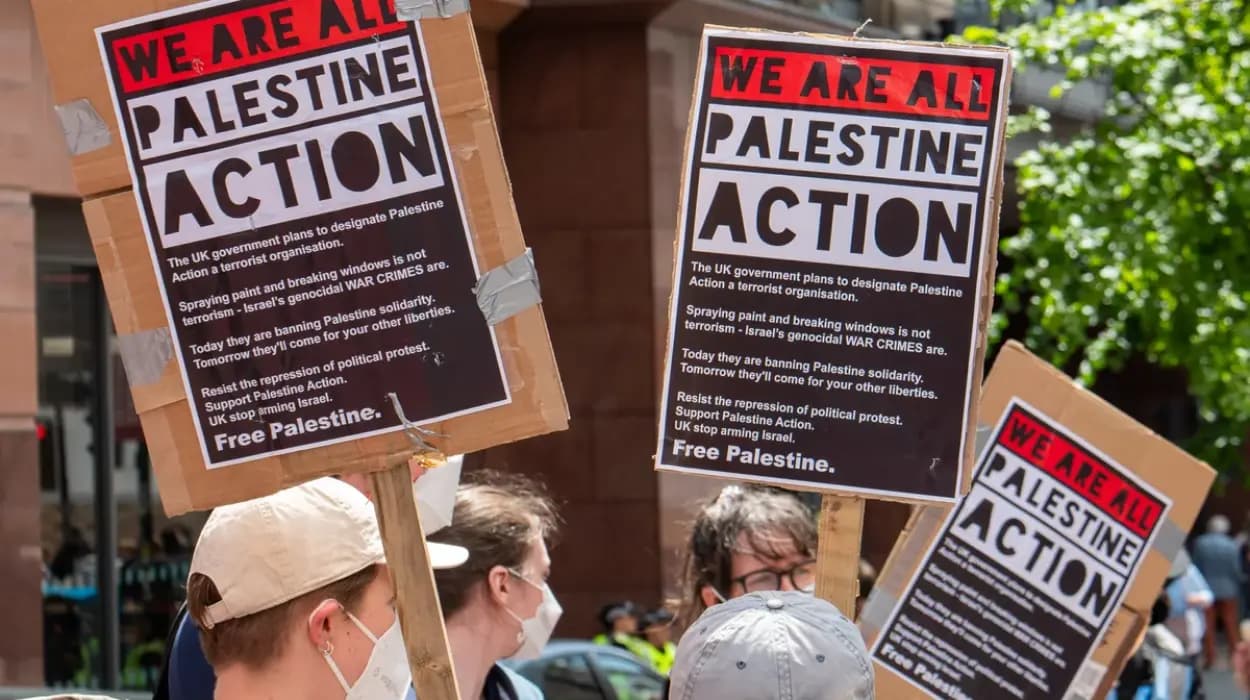
Jerusalem (The Palestine Telegraph Newspaper) January 27, 2026 – The Scottish Government’s decision to proscribe Palestine Action as a terrorist organisation faces judicial review in the Court of Session. Lawyers for the direct action group filed proceedings challenging the ban imposed under terrorism legislation. The case centres on claims that the proscription breaches free speech protections and lacks sufficient evidence of terrorist activity.
The judicial review application follows Home Secretary Yvette Cooper’s announcement on December 15, 2025, designating Palestine Action a proscribed organisation under the Terrorism Act 2000. The group, known for protests targeting arms manufacturer Elbit Systems, immediately contested the decision. Court documents confirm permission for review granted on January 20, 2026, with hearings scheduled for March.
Legal Basis and Proscription Process
The UK Government proscribed Palestine Action alongside the English Defence League and Muslim Defence League, citing repeated criminal damage at defence sites. Section 3 of the Terrorism Act empowers the Home Secretary to ban groups meeting the definition of involvement in terrorism. Membership or support for proscribed organisations carries up to 14 years imprisonment.

Palestine Action argues the decision violates Articles 10 and 11 of the European Convention on Human Rights, protecting expression and assembly. Solicitors claim insufficient evidence links activities to terrorism rather than legitimate protest. Government lawyers maintain the threshold met through documented incidents at Bristol, Leicester, and London facilities.
Timeline of Key Events Leading to Challenge
Palestine Action conducted high-profile actions since 2020, including climbing factory roofs and painting buildings red. Notable incidents involved five tonnes of red paint poured on Elbit’s Leicester site in June 2025. Police arrested over 200 activists since formation, with convictions for criminal damage and aggravated trespass.
The proscription followed an Order laid before Parliament on December 15, effective immediately. Group co-founder Richard Barnard surrendered to police, denying terrorism charges. Supporters rallied outside Downing Street, while Jewish and pro-Israel groups welcomed the ban.
Court of Session Judicial Review Framework
Scotland’s Court of Session handles judicial reviews of devolved and reserved matters. Proceedings examine legality, rationality, and procedural fairness of executive decisions. Three judges typically preside, with full hearings lasting days. Outcomes may quash decisions, remit for reconsideration, or uphold original rulings.
Palestine Action seeks interim interdict to suspend ban enforcement pending judgment. Government opposes suspension, citing public safety risks. Legal aid covers applicant costs, with crowdfunding raising £50,000 for defence.
Government Justification for Terrorism Designation
Home Secretary Cooper stated Palestine Action’s “pattern of serious criminal damage” posed unacceptable risk. MI5 assessments identified threat level from direct action tactics. Proscription Order specifies incidents from 2023-2025, including drone incursions and power disruptions at defence suppliers.'

Counter Terrorism Policing documented 47 arrests linked to group actions in 2025 alone. Security Minister statements highlighted endangerment of workers and disruption to vital defence contracts. Proscription aims to deter recruitment and funding streams.
Palestine Action's Core Arguments in Challenge
Legal team contends activities constitute protected civil disobedience, not terrorism. Terrorism Act requires intent to cause serious violence or endanger lives, neither proven. Group cites European Court of Human Rights precedents protecting disruptive protest.
Affidavits detail non-violent training protocols and targeting of property only. Applicants argue political motivation behind ban amid Gaza conflict scrutiny. Free speech implications extend to climate and anti-arms groups, per supporting briefs.
Previous Legal Challenges and Precedents
Judicial reviews successfully overturned proscriptions of animal rights groups in 2007. Irish nationalist organisations challenged designations post-Good Friday Agreement. Court stressed narrow interpretation protecting democratic expression.
Recent cases upheld bans where evidence showed incitement or serious violence. Lord Justice Singh ruled in 2024 that proportionality assessment mandatory for protest groups.
Impact on Members and Ongoing Operations
Over 100 named activists face investigation post-proscription. Police executed warrants across England and Scotland, seizing devices and documents. Group shuttered physical office, migrating to encrypted platforms.
International solidarity chapters continue operations abroad. Legal defence fund supports those charged under new provisions. Supporters claim membership applications surged 300 per cent post-ban.
Statements from Political and Community Leaders
First Minister John Swinney called for careful legal process respecting rights. SNP MSPs tabled parliamentary motion questioning reserved powers application. Labour MP Stella Creasy voiced concerns over protest chill effect.
Board of Deputies president welcomed challenge defeat hopes. Israeli embassy noted alignment with counter-terrorism efforts. Amnesty International urged human rights compliance in rulings.
Wider Implications for Protest Rights
Proscription coincides with Public Order Act 2023 enhancing police powers against disruptive protests. Over 2,000 arrests recorded since October 2023 across causes. High Court struck down certain provisions as disproportionate last month.

Climate groups Just Stop Oil and Extinction Rebellion face similar scrutiny. National Security Act 2023 broadens foreign influence definitions. Free expression advocates warn slippery slope to authoritarian controls.
Elbit Systems and Defence Industry Response
Elbit UK reported £10 million damages from Palestine Action actions since 2022. Company secured injunctions barring proximity protests. Ministry of Defence contracts unaffected, per official statements.
Trade body ADS Group endorsed proscription protecting 300,000 jobs. Security upgrades implemented at 50 facilities nationwide.
International Comparisons and Solidarity
Irish government declined similar ban despite cross-border actions. US First Amendment protections preclude equivalent designations. European human rights bodies monitoring UK compliance.
Palestinian solidarity groups in Canada and Australia condemned proscription. BDS movement distanced from direct action tactics while affirming speech rights.
Court Scheduling and Next Procedural Steps
Full substantive hearing set for March 10-12, 2026. Pre-trial process includes disclosure of sensitive intelligence. Closed material procedure likely for national security evidence.
Government files detailed grounds defence by February 15. Applicants permitted reply submissions. Permission stage confirmed all grounds proceed.
Media Coverage and Public Debate
BBC broadcast special programme examining terrorism definitions. Guardian serialised court documents. Daily Mail highlighted property damage costs. Social media campaigns #FreePalestineAction trended nationally.
Polling shows 52 per cent public support for ban, 38 per cent oppose. University societies disaffiliated amid compliance fears.
Expert Legal Commentary on Prospects
Constitutional law professors predict 60 per cent likelihood of successful challenge. Terrorism experts stress evidence threshold rigour. Human rights barristers cite margin of appreciation limits.
Precedents suggest factual disputes favour applicants. Government success hinges on closed hearings demonstrating imminent threats.