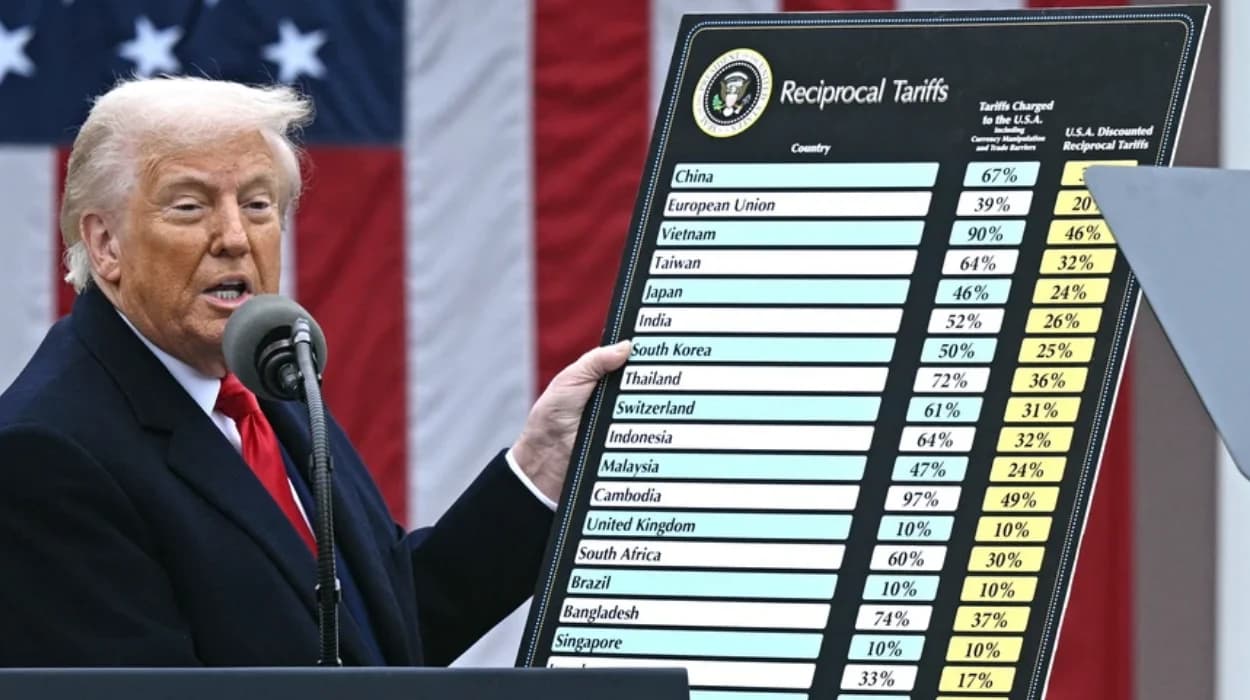
An Illinois-based family toy business, Learning Resources, led by CEO Rick Woldenberg, is challenging former President Donald Trump’s tariffs before the U.S. Supreme Court, arguing Trump exceeded his authority under the International Emergency Economic Powers Act (IEEPA). The case—set for hearing on November 5, 2025—could have significant economic and political implications, with the company citing millions in losses and urging the highest court to clarify presidential tariff powers.
Family Toy Business Challenges Trump's Tariffs at Supreme Court
As reported by Allison Cantor of Fox 32 Chicago, Vernon Hills-based Learning Resources and its affiliated brand hand2mind are preparing to fight President Trump's tariffs before the U.S. Supreme Court. The companies argue that Trump’s invocation of the IEEPA to impose tariffs lacks constitutional and statutory authority. The family-owned business, which focuses on educational toys, claims the tariffs have inflicted heavy financial harm, costing them approximately two million dollars in 2024 and projecting up to fourteen million dollars in 2025 alone.
Elana Ruffman, Vice President of Marketing & Product Development at hand2mind, highlighted the logistical and financial burdens caused by the tariffs, noting how frequent product relocations due to shifting tariffs incur costs around $5,000 per move for updating labels and manufacturing adjustments.
“Every time you move a product, it costs money,”
Ruffman said, emphasising the impact on their operations and workforce.
Legal Basis: Questioning the Scope of Presidential Authority
Rick Woldenberg, CEO of the fourth-generation family business, brought the lawsuit against the Trump administration in April 2025. Woldenberg contends that the tariffs imposed under Trump’s so-called “Liberation Day” tariff program drastically raised their import costs, which could increase from $2.3 million to nearly $100 million if fully implemented. Woldenberg sees the Supreme Court case as potentially historic, aiming for a ruling on whether these tariffs are lawful and seeking remedies if the court finds they are not.
The legal crux centers on the 1977 International Emergency Economic Powers Act (IEEPA), which permits a president to act in response to "any unusual and extraordinary threat" impacting U.S. national security, economy, or foreign policy. But lower courts have ruled that the IEEPA does not give the president unfettered power to impose tariffs arbitrarily, a position backed by a U.S. District Court ruling in May 2025 which favoured Woldenberg’s companies.
Tariffs' Impact on the Toy Industry and Broader Economy
According to Rachel Jones from Education Week, Learning Resources and hand2mind primarily manufacture their products overseas, with about 60% imported from China before recent tariff-related production shifts. Their product lines include items promoting STEM education, coding, social-emotional learning, and more. The tariffs have forced the companies to reconsider and alter their supply chains significantly.
Trump’s tariff regime, initiated in his second term, started with a baseline 10% duty on many imported goods, with potential tariffs on China reaching as high as 130% if fully applied. This created an unpredictable business landscape for many companies dependent on global supply chains, including the toy makers, who find rapid tariff changes particularly disruptive.
Woldenberg expressed that his decision to sue was driven by a sense of responsibility not just toward his own company, but also to set a precedent and encourage others to stand against unfair trade practices.
Broader Litigation Landscape and Related Cases
The Supreme Court is set to hear a consolidated group of cases challenging Trump’s tariff authority, including Learning Resources' lawsuit. Other related cases involve coalitions of states led by Oregon and libertarian advocacy groups representing small businesses like wine distributors and other educational manufacturers. Attorneys from the prominent Akin Gump law firm represent Learning Resources in what many regard as a pivotal case on executive tariff powers.
Despite the widespread effect of the tariffs, many major U.S. corporations have reportedly avoided engaging in the litigation, neither filing lawsuits nor submitting amicus briefs to express their views. This absence makes the family-owned toy business’ challenge all the more notable in the broader debate over presidential trade authority.
Urgency and Court Schedule
The Supreme Court agreed to hear oral arguments on November 5, 2025, an unusually swift move reflecting the case’s urgency and its wide-reaching implications. The Trump administration has requested expedited consideration, seeking to speed up the resolution of this contentious issue. Although the court’s schedule often involves lengthy deliberations, the significance and complexities of these tariff disputes have pushed for faster judicial review.
Other Businesses Affected
Aside from the toy companies, American small businesses from other sectors have also been vocal about the tariffs’ harmful impact. For example, Terry Precision Cycling, a Vermont-based company specialising in women's cycling apparel, joined the Supreme Court challenge fearing that the tariffs might force them out of business due to increased import costs. Company president Nik Holm described feeling
“like our backs were up against the wall,”
underscoring the widespread economic distress.
A Potentially Landmark Case for Presidential Trade Powers
This Supreme Court case marks a crucial moment in defining the balance of trade authority between the executive branch and the courts. Rick Woldenberg and other small business owners await a decision that could limit presidential powers under the IEEPA and reshape U.S. trade policy for years to come. Regardless of the outcome, the case underscores the high stakes for family businesses navigating international tariffs and the broader American economy affected by executive trade decisions.