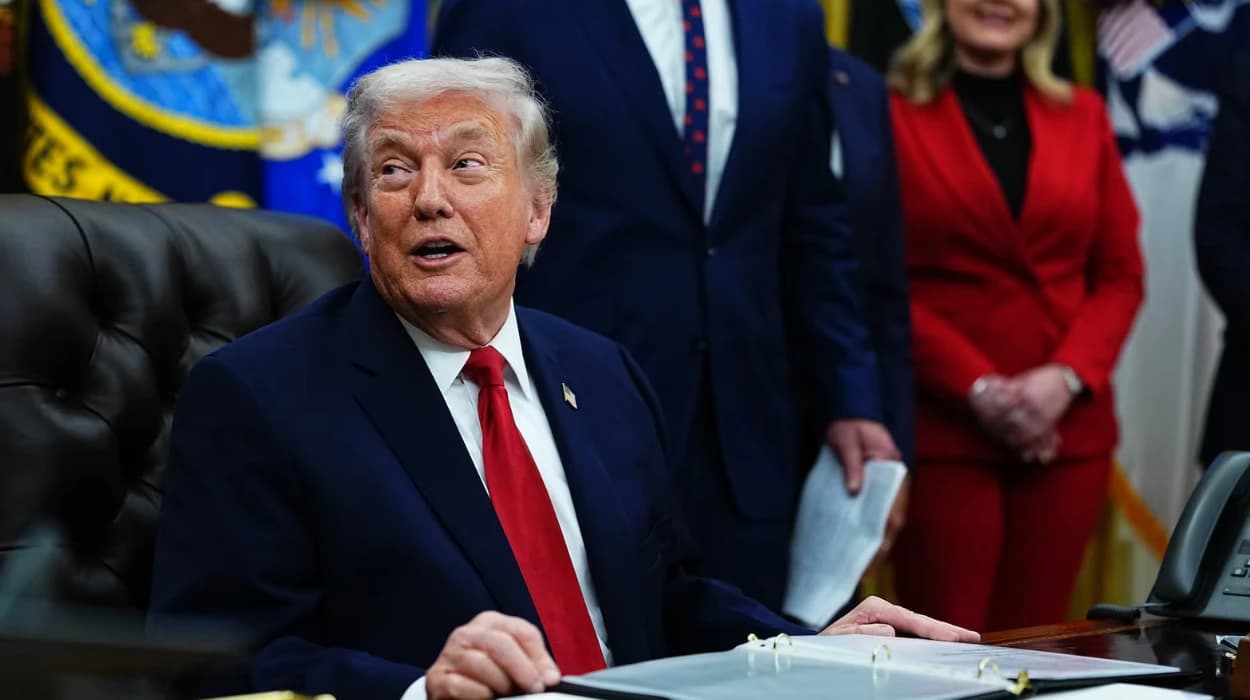
Donald Trump (The Palestine Telegraph Newspaper) February 01, 2026 – President Donald Trump said the United States has begun communicating with Cuban leaders as his administration tightens pressure on the island, including cutting off key oil supplies from Venezuela and Mexico. He linked recent oil restrictions and new tariff measures to an effort to push Havana towards negotiations with Washington. Trump did not provide details on the level or timing of the contact but suggested the Cuban government could be forced to the negotiating table under growing economic strain. Mexico’s president has warned the measures risk creating a humanitarian crisis in Cuba and has vowed to look for ways to continue supplying the island.
The United States is intensifying economic pressure on Cuba, with President Donald Trump stating that Washington is
“starting to talk to Cuba”
while simultaneously moving to restrict the island’s access to oil. Speaking to reporters aboard Air Force One on Saturday night as he travelled to Florida, Trump indicated that recent moves targeting Cuban energy supplies were designed to increase leverage over the country’s leadership.
Trump links oil cuts to push for Cuba talks
Trump said his administration had taken steps in recent weeks to cut off supplies of oil reaching Cuba from Venezuela and Mexico, measures he suggested would compel Havana to engage in talks with the United States.
“We’re starting to talk to Cuba,”
Trump told reporters, without specifying which Cuban officials were involved or what format the contacts were taking.
He characterised the pressure campaign as part of a broader effort to confront foreign governments perceived as adversaries of the United States. Trump has shifted more attention to Cuba since early January, following his administration’s capture of Venezuela’s then-President Nicolás Maduro and actions aimed at reconfiguring relationships with governments in the region.

Executive order targets oil suppliers to Cuba
In the past week, Trump signed an executive order imposing a tariff on any goods from countries that sell or provide oil to Cuba, a measure that directly affects Mexico. The order followed an earlier decision to halt oil shipments from Venezuela, which had been a primary supplier to Cuba before Maduro’s removal.
After Venezuelan oil was cut off, Cuba became increasingly dependent on Mexican supplies, making Mexico a central focus of the new restrictions. The tariff mechanism is intended to raise the economic cost for countries that continue to provide oil to Cuba, thereby amplifying the pressure on Havana’s access to fuel.
Mexico warns of risk of humanitarian crisis
Mexican President Claudia Sheinbaum has publicly criticised the new US measures, warning that the restrictions on oil supplies could trigger a humanitarian crisis in Cuba. Sheinbaum said on Friday that her government would seek alternatives to continue assisting Cuba, indicating Mexico’s intention to maintain some form of support despite the added US pressure.
Her comments underscore the potential wider regional impact of US policy changes toward Cuba and its energy sources. While Sheinbaum acknowledged the risk posed by the new tariffs, she also signalled that Mexico would attempt to navigate around the measures to sustain its cooperation with Havana.
Trump predicts fall of Cuban government and future deal
Trump has predicted that the Cuban government is “ready to fall”, positioning the tightening of oil supplies and trade pressure as factors that could accelerate political change on the island. He suggested that the expanding economic strain would eventually push Cuban leaders to seek a negotiated arrangement with Washington.
“It doesn’t have to be a humanitarian crisis. I think they probably would come to us and want to make a deal,”
Trump said, adding that
“Cuba would be free again”.
He indicated that he expected “some sort of deal” to be reached with Cuba and said,
“I think, you know, we’ll be kind,”
but he did not outline specific conditions or proposals under discussion.
Limited detail on scope of US–Cuba contacts
Despite saying the United States was “starting to talk to Cuba”, Trump did not provide concrete information about the scope, timing, or format of the outreach. He did not clarify whether communication had taken place at diplomatic, intelligence, or other levels, nor did he specify which issues were on the table.
The absence of detail leaves key questions open regarding the nature of any emerging channel between Washington and Havana. Trump’s remarks suggested that the outreach is in an early stage and closely tied to the broader pressure strategy focused on oil and trade measures.
Intensified focus on Cuba after shift in Venezuela
Trump’s comments come after a period in which his administration has moved more aggressively against governments regarded as opponents of US policy in the Western Hemisphere. In early January, US authorities captured Venezuela’s then-President Nicolás Maduro, a development that significantly altered the political landscape in Caracas and affected Cuba’s external support arrangements.

The halt of Venezuelan oil shipments to Cuba following Maduro’s capture forced Havana to seek alternative suppliers, with Mexico emerging as a critical source. The subsequent US tariff order aimed at countries supplying oil to Cuba further narrowed those options, adding to the economic pressure on the island’s energy sector.
Impact on Cuba’s energy supplies and economy
The combination of halted Venezuelan shipments and US tariffs on countries providing oil to Cuba has reduced the island’s access to fuel, according to Trump’s description of the situation. He said his recent moves to cut off oil supplies had “squeezed the island”, implying that energy shortages could intensify.
Such constraints are likely to strain key sectors that rely on fuel, including transport, electricity generation, and public services. While Trump framed the pressure as a means to encourage negotiations, Sheinbaum’s warning highlighted concerns that ordinary Cubans could bear the brunt of any resulting shortages.
Regional and international reactions and next steps
Mexico’s stated intention to seek alternatives for assisting Cuba indicates that at least one regional government is exploring ways to respond to the new US measures. Sheinbaum has not provided detailed plans on how Mexico might maintain support while managing the impact of US tariffs, leaving the practical contours of any workaround unclear.
Trump, meanwhile, has maintained that the United States is prepared to engage with Cuba under conditions shaped by his administration’s pressure strategy. He has not announced any formal timetable for talks, nor any specific diplomatic framework, but has repeatedly suggested that an agreement with Havana is possible in the context of continued economic leverage.