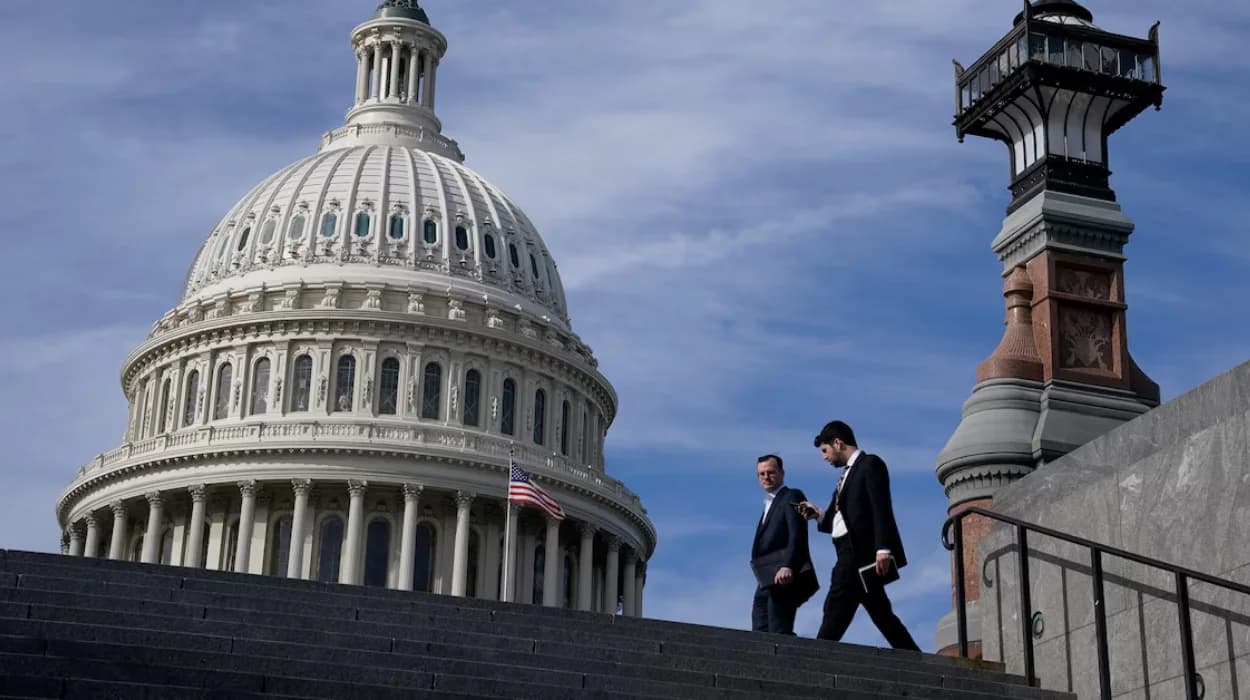
USA (The Palestine Telegraph News) January 31, 2026 – The United States government entered a partial shutdown at 12:01 a.m. on January 31, 2026, after Congress failed to enact a last-minute funding agreement before the midnight deadline. Senate Democrats and President Donald Trump endorsed a compromise to extend Department of Homeland Security (DHS) funding for two weeks while funding other agencies through September, but the House recessed until February 2 prevented a vote.
The impasse centres on Democratic demands for Immigration and Customs Enforcement (ICE) reforms following fatal shootings in Minneapolis, leaving DHS operations disrupted while military and other essential functions continue.
The shutdown followed the Senate's 71-29 passage of the compromise bill on January 30, which separated contentious DHS funding. House Speaker Mike Johnson confirmed the chamber would not reconvene before Monday, citing logistical challenges in assembling members. President Trump publicly urged a bipartisan vote, stating it was essential to avoid delays in national priorities. This marks the second shutdown in recent months, after a 43-day closure ended in November 2025.
Senate Democrats Demand ICE Operational Reforms
Amid negotiations, Senate Democrats threatened to block the omnibus funding package unless the White House introduced reforms for ICE agents.
Aleksandar Djokic (Александар Джокич) said in X post,
“Senate Democrats threaten to block a funding bill for the US Department of Homeland Security unless the White House reforms ICE, limiting agents to not wearing masks, identifying themselves, and arresting only with warrants, potentially triggering a government shutdown. Chuck Schumer stated Americans support law enforcement but not ICE terror on streets or citizen killings. Associated Press reports Republicans and White House may agree to short-term funding extension amid talks. This follows outrage over ICE agents fatally shooting Minneapolis resident Alex Pretty during a confrontation. Trump called it tragic but escalated tensions with Mayor Jacob Frey over sanctuary city policies, while Attorney General Pam Bondi announced arrests of 16 rioters and over 3,000 immigrants detained in Metro Surge operation.”
Democrats specifically sought mandates for body cameras, prohibitions on masks and roving patrols, and warrant requirements for arrests. Senate Majority Leader Chuck Schumer articulated that public support existed for law enforcement but not for street-level confrontations resulting in citizen deaths. The compromise reflected these concerns by isolating DHS funding for further talks.
Minneapolis Shootings Ignite Funding Dispute
The crisis escalated after two fatal encounters involving ICE and Customs and Border Protection (CBP) agents in Minneapolis. On January 7, Renee Good, a 37-year-old mother of three, died during a vehicle stop witnessed by civilian observers. Intensive care nurse Alex Pretti, aged 37 and employed at a veterans' hospital, suffered a fatal shooting on January 24, marking the second U.S. citizen death without criminal records that month. These incidents derailed a House-passed funding package from January 22, prompting Democrats to withdraw support for DHS appropriations.
President Trump described the Pretti shooting as tragic and adjusted enforcement tactics in the area. Border chief Tom Homan directed agents to focus on targeted operations, avoiding broad sweeps. Internal ICE guidance instructed officers to limit engagements with agitators. Minneapolis Mayor Jacob Frey faced criticism from Trump over sanctuary city policies, while Attorney General Pam Bondi reported arrests of 16 rioters alongside over 3,000 immigrant detentions in a Metro Surge operation.

House Recess Prevents Final Approval
The Senate advanced the revised bill after resolving holds, including one from Senator Lindsey Graham over unrelated provisions. Graham lifted it in exchange for votes on immigration cooperation mandates and expanded legal remedies for prior investigations.
Despite Trump's endorsement via social media, House logistics proved insurmountable before the deadline. Speaker Johnson acknowledged a brief shutdown appeared inevitable during a January 29 event. The Office of Management and Budget initiated shutdown procedures at midnight.
The agreement funded five other appropriations bills fully, covering defence, health care, transportation, housing, and more through September. DHS received only a two-week extension, allowing time for ICE reform discussions. This structure addressed Democratic priorities while advancing broader government operations.
Protests and Public Backlash Mount
Nationwide demonstrations followed the Minneapolis incidents. Thousands protested in the city on January 30, joined by student walkouts across the U.S. A Reuters/Ipsos poll showed Trump's immigration enforcement support at its lowest in his second term, with majorities deeming tactics excessive. Footage of masked, armed agents amplified concerns.
In Washington, 54 faith leaders faced arrest on January 29 for occupying the Hart Senate Office Building with anti-ICE banners. U.S. Capitol Police enforced rules against indoor demonstrations. These actions underscored religious community opposition to current enforcement methods.
Operational Impacts of Partial Shutdown
DHS components, including ICE, CBP, Coast Guard, Secret Service, and disaster response units, now operate under lapsed funding. Essential functions continue, but non-essential staff face furloughs without immediate pay. Federal courts anticipate insufficient funds past February 4, risking hearing delays. Internal Revenue Service tax processing and Bureau of Labor Statistics data releases may halt, alongside National Institutes of Health research.

Exempt agencies encompass the Department of Defense, Justice, FBI, NASA, Veterans Affairs, Agriculture, EPA, Army Corps of Engineers, Smithsonian, and National Science Foundation, secured by prior Trump-signed measures. Air traffic control and active military duties persist as essential. Economic sectors reliant on government data prepare for disruptions.
Prior Shutdown Sets Tense Precedent
This partial closure succeeds a record 43-day shutdown from October 1 to November 12, 2025, resolved via a continuing resolution and full-year bills for select departments. That episode included backpay guarantees for furloughed workers and barred mass layoffs. Voter immigration concerns propelled Trump's 2024 reelection, but recent events shifted sentiment. Lawmakers anticipate a swift House vote post-recess to end the current lapse.
Federal contractors and employees activate contingency plans. The shutdown's brevity depends on February 2 proceedings, with negotiators targeting DHS resolution within the two-week window. Markets monitor potential effects on indicators and investor confidence.