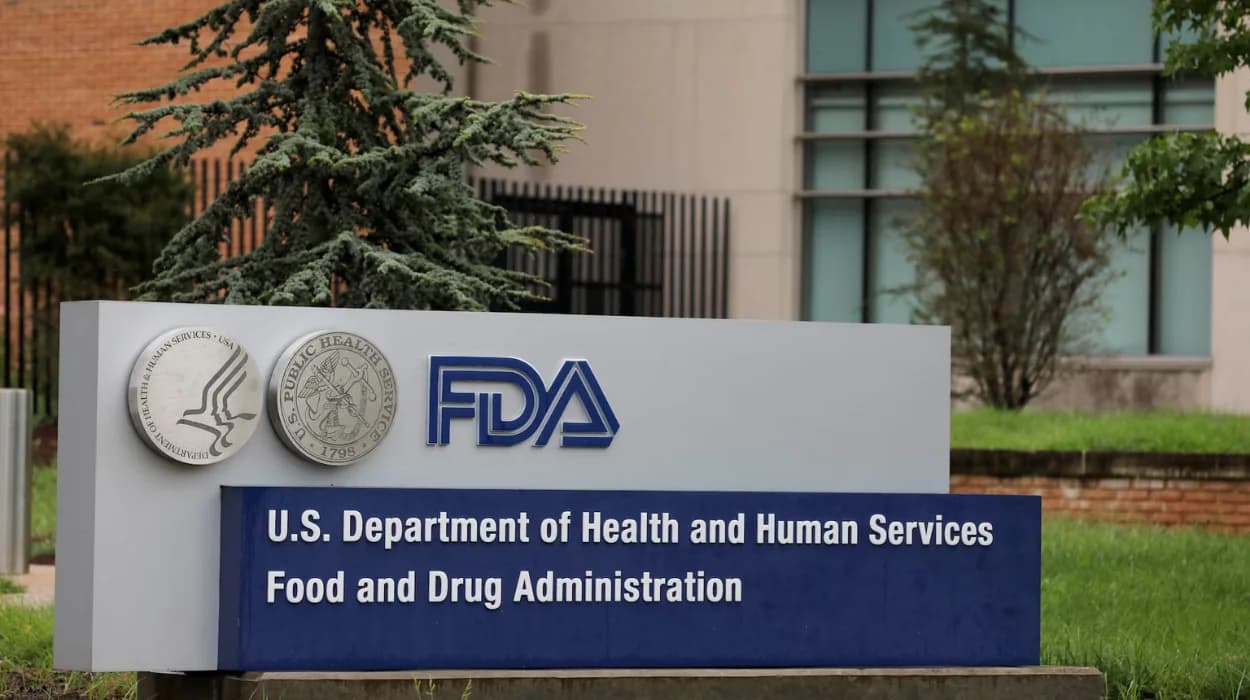
Washington (The Palestine Telegraph Newspaper) February 01, 2026 – The US Food and Drug Administration has launched a new PreCheck pilot programme intended to strengthen domestic pharmaceutical manufacturing and improve the resilience of the national drug supply chain. The initiative will streamline regulatory interactions for new US-based drug production facilities and aims to make it easier and faster for manufacturers to build and qualify plants in the United States.
Applications for participation open on 1 February 2026, with the FDA planning to select an initial cohort of facilities later this year based on alignment with federal priorities, including production of critical medicines for the US market. The programme forms part of a broader strategy, backed by President Donald Trump, to reduce reliance on foreign drug manufacturing and mitigate shortages of essential medicines.
The US Food and Drug Administration (FDA) said the PreCheck pilot programme is designed to increase regulatory predictability and streamline assessment of new domestic pharmaceutical manufacturing facilities. The initiative follows recent policy directions from the White House aimed at encouraging companies to locate drug production in the United States, including an executive order instructing the agency to remove unnecessary regulatory hurdles for domestic facilities.
PreCheck pilot aims to streamline US drug plant approvals

According to the FDA, the PreCheck programme will focus on new pharmaceutical manufacturing sites that intend to supply the US market and that can demonstrate strong alignment with national priorities, such as producing critical medicines and advancing innovative manufacturing methods. The agency will begin accepting facility applications on 1 February and will continue to receive submissions until 1 March, after which it plans to select an initial group of sites by 30 June.
PreCheck is structured as a two-phase process covering both early facility development and the regulatory review of manufacturing information within drug applications. In the first phase, known as the Facility Readiness Phase, selected manufacturers will receive early technical advice from FDA staff on elements such as facility design, construction plans and pre-operational activities, supported by a facility-specific Drug Master File to allow advance evaluation of site-related information.
In the second phase, the Application Submission Phase, the programme will enable additional engagement through pre-submission meetings, targeted inspections and expedited assessment of manufacturing data in marketing applications.
FDA Commissioner Marty Makary said the PreCheck initiative is one of several measures the agency is taking to support a robust domestic drug supply and reduce dependence on overseas manufacturing. He described the programme as a way to simplify assessment of US-based plants and to remove duplicative or unnecessary regulatory requirements while maintaining standards designed to ensure product quality.
Programme linked to Trump administration push for domestic production
The launch of the PreCheck pilot follows a May executive order by President Donald Trump on “Regulatory Relief to Promote Domestic Production of Critical Medicines”, which directed the FDA to streamline and accelerate the development of domestic pharmaceutical manufacturing. The order instructed the agency to improve inspection processes, eliminate redundant requirements and provide clearer, earlier guidance to companies seeking to build drug plants in the United States.
Reuters reported that the administration has also signalled it may use tariffs on pharmaceutical imports, starting at relatively low levels and potentially rising as high as 250 percent, as an additional tool to encourage relocation of drug manufacturing to the US. The FDA initiative is intended to complement these broader policy measures by directly targeting regulatory processes that can affect investment decisions by drug makers.
In a separate statement, the FDA said PreCheck incorporates feedback from manufacturers, healthcare providers and other stakeholders gathered during a 2025 public meeting on onshoring pharmaceutical production. The agency said participants highlighted the need for earlier and more predictable engagement with regulators, particularly during facility design and construction, to reduce uncertainty around future inspections and application reviews.
Selection criteria and national priority focus for facilities
The FDA has stated that facilities selected for PreCheck will be chosen based on “overall alignment with national priorities” across several criteria. These criteria include the types of products to be manufactured, the stage of facility development, the timeline for delivering products to the US market and the degree of innovation in facility design or manufacturing technology.
Additional priority will be given to plants that plan to produce medicines regarded as critical for US patients, particularly those where supply disruptions have previously contributed to shortages. The agency has not published a detailed list of products covered by this designation in its public announcements, but it has framed the initiative as part of a broader strategy to reduce drug shortages and enhance public health protection by strengthening supply chain resilience.
According to a January news release, the FDA expects to start conducting PreCheck activities with the selected initial cohort of facilities during 2026. These activities will include structured interactions between agency staff and participating manufacturers over the course of facility development, as well as coordination with subsequent inspections linked to specific drug applications.
Regulatory support, facility engagement and expected benefits
The PreCheck programme is intended to provide participating manufacturers with earlier and more frequent contact with the FDA than is typical under standard processes. In practice, this will involve agency input on facility layouts, equipment selection, quality systems design and other technical aspects before a site begins commercial operations.
By allowing facility-specific information to be reviewed in advance through a dedicated Drug Master File, the FDA aims to reduce the amount of site-related assessment required once a company files a marketing application for a particular drug. This approach is expected to shorten review timelines for products manufactured at PreCheck facilities, though the agency has not specified numerical targets for time reductions in its public statements.
An FDA resource document on quality management maturity, published by the agency’s Center for Drug Evaluation and Research (CDER), notes that promoting advanced quality practices at manufacturing establishments is a key element of efforts to strengthen the pharmaceutical supply chain. The QMM programme, which aims to encourage manufacturers to adopt quality systems that go beyond current good manufacturing practice requirements, is being developed in parallel with initiatives such as PreCheck.
According to CDER, these measures are intended to support more reliable production and to provide regulators with greater insight into the state of quality at facilities that supply the US market.
Broader strategy to tackle shortages and supply chain risks
The FDA has linked the PreCheck pilot to a broader policy framework designed to address recurring shortages of medicines and vulnerabilities exposed in the US pharmaceutical supply chain. This framework includes plans to enhance domestic capacity, diversify sourcing, and encourage investment in technologies that can improve the robustness and flexibility of manufacturing.
In previous communications, the agency has also announced separate pilot projects to accelerate review of certain domestically made generic drugs as part of efforts to expand availability of lower-cost treatments and to reduce dependence on imports. These pilots are intended to complement facility-focused initiatives by targeting product-level regulatory processes.
The FDA has said that data and experience gathered from the PreCheck pilot will inform potential future expansion of the programme or integration of its elements into standard regulatory practice. The agency plans to monitor outcomes such as construction timelines, readiness for inspection, and the incidence of post-approval manufacturing issues at participating facilities.
Industry response and next steps for implementation
Industry stakeholders have previously raised concerns about the impact of global disruptions on the availability of active pharmaceutical ingredients and finished medicines in the US market, particularly when manufacturing is heavily concentrated in a small number of foreign locations. In public forums and consultation exercises referenced by the FDA, companies have pointed to regulatory complexity and uncertainty as factors that can affect decisions about where to build new plants.
The PreCheck programme offers manufacturers the opportunityto engage with the FDA at earlier stages than usual, but participation is voluntary and restricted to new facilities that meet the selection criteria set out by the agency. Establishments that are chosen will still be required to comply with all applicable statutory and regulatory requirements, including current good manufacturing practice standards and pre-approval inspections associated with specific drug applications.
The FDA has indicated that information obtained through PreCheck interactions may help streamline subsequent application reviews, but it has emphasised that marketing approvals will continue to be based on established safety, efficacy and quality standards. The agency has not announced a fixed duration for the pilot but has stated that it will evaluate programme performance before deciding whether to expand, modify or discontinue the initiative.
Timeline and key milestones for PreCheck pilot

According to the FDA’s January announcement, the key dates for the PreCheck pilot in 2026 are as follows: opening of applications on 1 February, closure of the application window on 1 March and selection of the initial facility cohort by 30 June. PreCheck activities with the selected sites are expected to begin later in 2026, with results and lessons learned to be assessed on an ongoing basis.
Alongside the pilot, CDER continues to refine its approach to quality management maturity assessments, including voluntary programmes that evaluate management commitment to quality, business continuity, technical excellence, advanced quality systems and employee engagement at drug manufacturing sites.
The agency has said these initiatives collectively aim to support a more resilient pharmaceutical supply chain that can better withstand disruptions and ensure timely access to medicines for patients in the United States.