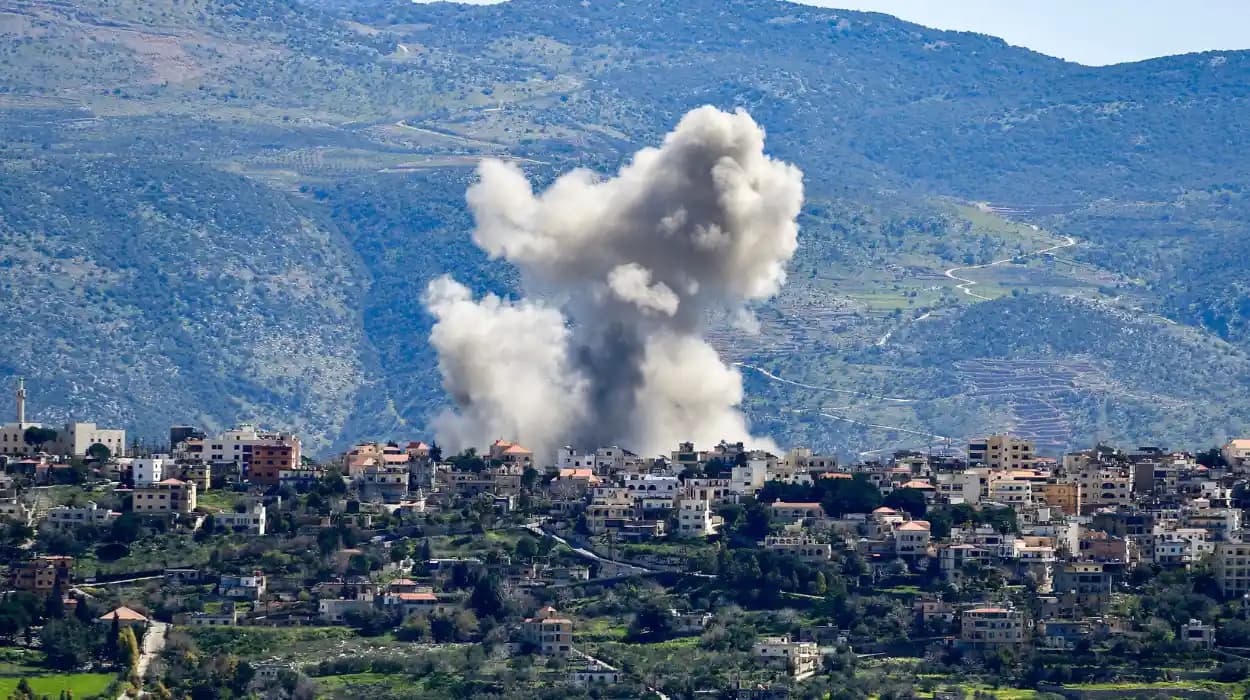
The Israel Defense Forces (IDF) recently conducted multiple airstrikes on Hezbollah targets in southern Lebanon, targeting weapons storage, rocket launchers, and military infrastructure. The strikes came after violations of ceasefire agreements, including mortar attacks by Hezbollah. Both sides have blamed each other for escalating tensions, while civilians have suffered casualties and displacements.
What prompted the IDF airstrikes in southern Lebanon?
The IDF launched a series of airstrikes targeting Hezbollah terror infrastructure in southern Lebanon following several violations of a fragile ceasefire between Israel and the Iran-backed group Hezbollah. According to the IDF, the strikes targeted weapons storage facilities, missile launchers, and underground military sites used by Hezbollah operatives to launch attacks on Israeli territory.
As reported by the Long War Journal, the strikes included attacks on areas such as Jbaa, Zahalti, Sniya, Taraiyya near Baalbek, and Janta in the Beqaa Valley, aiming to disrupt Hezbollah's transit and weapons infrastructure that often receives arms from Syria.
How did the IDF justify these strikes?
The IDF stated that the airstrikes were responses to activities and threats identified at the targeted sites. After Hezbollah fired mortars towards the Mount Dov area, constituting "a serious violation of the ceasefire," Prime Minister Benjamin Netanyahu vowed a firm Israeli response. Defense Minister Israel Katz echoed this with warnings of a "harsh response" to ceasefire breaches.
The IDF further claimed its operations are in defence of the citizens of Israel and that Lebanon, as a state, is responsible for preventing Hezbollah from launching attacks from its territory. The military vowed to continue its efforts to "eliminate every threat" posed by Hezbollah and prevent the terrorist group from establishing a presence near the Israeli border.
What are the details of the recent strikes and their impact?
On August 6 and 7, 2025, the IDF targeted over 50 Hezbollah locations throughout Lebanon, including weapons stores, launchers, and operational infrastructure. There were reports of multiple airstrikes hitting southern Lebanon districts such as Jezzine, Sidon, Nabatieh, and Baalbek, among others.
In one instance, Israeli jets struck a Hezbollah facility used to hold medium-range rockets. Another airstrike targeted operatives in a launch site from which dozens of rockets were fired at Israel. The IDF also fired warning shots at suspected Hezbollah operatives attempting to approach no-go zones near the border.
Although the IDF asserted the strikes were carefully aimed at terrorist targets, Lebanese sources reported casualties among civilians, including wounded people in areas like Hawsh al Sayyed Ali and the villages of Haris and Tallousa, where at least nine people were killed in other strikes reported in late 2024 and early 2025.
How has Hezbollah responded to the IDF airstrikes?
Hezbollah has denied responsibility for some rocket fire from southern Lebanon, calling Israeli accusations "excuses" for aggression. They reaffirm their commitment to the ceasefire while condemning continued Israeli operations against Lebanon, which they describe as acts of ongoing aggression.
Following recent strikes, Hezbollah fired numerous rockets into northern Israel, resulting in injuries and further escalating tensions. The group stated that their military actions support the Palestinian militant group Hamas and vowed to continue until a ceasefire in Gaza is achieved.
What has been the role of the Lebanese government and armed forces?
Media reports indicate that the Lebanese Armed Forces (LAF) have not taken sufficient action to curb Hezbollah's military activities in southern Lebanon. The ceasefire agreement brokered by the U.S. and France requires the LAF to disarm Hezbollah and dismantle its military infrastructure south of the Litani River, but implementation remains limited.
The IDF and international observers have criticised Lebanon for failing to control the border effectively, allowing Hezbollah to maintain and replenish its weapons stockpiles. The Lebanese government faces pressure to uphold its responsibilities in preventing its territory from being used for hostilities against Israel.
What is the broader context of the Israel-Hezbollah conflict?
The recent airstrikes are part of an ongoing conflict cycle that intensified following the October 7, 2023 Hamas attacks on Israel. Hezbollah launched military operations the next day, escalating into a prolonged confrontation involving heavy Israeli airstrikes and rocket attacks from Lebanon.
According to BBC and other sources, between October 2023 and early 2025, thousands have been killed or injured, with heavy damage in Lebanon and northern Israel. The United Nations has expressed concern over the potential for full-scale war, warning that Lebanon could become "another Gaza".
What are Israeli military objectives in Lebanon currently?
Lt Gen Herzi Halevi of the Israeli military outlined three primary objectives for ongoing operations in Lebanon: to degrade Hezbollah's rocket-launching capabilities, to push Hezbollah forces away from the border, and to dismantle the elite Radwan forces' infrastructure established for attacks on Israeli civilians. These airstrikes aim to secure northern Israeli communities and enable displaced residents to return home safely.
What are the humanitarian consequences of the airstrikes?
The ongoing hostilities have led to significant civilian casualties and displacement. Lebanese health authorities reported hundreds of deaths from Israeli airstrikes, with thousands more injured. Many villages, particularly in southern Lebanon, have been badly damaged, with civilians fleeing their homes amid escalating violence.
Some residents have begun returning to their destroyed homes despite the risks, expressing resolve to rebuild their lives. However, the continued cycle of violence remains a severe humanitarian concern across the region.
What do international actors say about the conflict?
The United Nations and human rights experts have condemned the heavy civilian toll and the use of "destructive violence" by Israel in Lebanon. Secretary-General António Guterres has warned about the dangers of an all-out conflict in Lebanon. Meanwhile, the ceasefire brokered by the U.S. and France remains fragile and riddled with violations by both sides.
The IDF's recent airstrikes on Hezbollah targets in southern Lebanon mark a further escalation in an already tense and volatile conflict. Both sides blame each other for ceasefire violations as they engage in a deadly struggle with significant humanitarian consequences, while international calls for restraint continue. The situation remains precarious, with the potential for wider conflict looming.