Yemen's Houthi group launched a hypersonic ballistic missile at Israel's Ben Gurion Airport, successfully striking the area due to a technical malfunction in Israel's missile defense. The attack caused injuries, disrupted airport operations, and exposed vulnerabilities in Israel’s layered air defence systems.
Houthi Missile Penetrates Israel’s Defences
On May 4, 2025, the Houthi movement from Yemen fired a ballistic missile targeting Tel Aviv’s Ben Gurion Airport. According to the Houthi military spokesman Yahya Sarea, the missile was a hypersonic weapon equipped with stealth technology and travelled approximately 2,150 kilometres, hitting the area near the airport’s main terminal. Sarea asserted:
“One of the missiles directly hit Ben Gurion Airport, and the interceptor systems failed to intercept it” (Xinhua News Agency).
The attack symbolically challenged Israel’s air defences that up to that point were considered robust.
The Israel Occupation Forces (IOF) confirmed their attempts to intercept the missile using advanced U.S.-made systems, including the THAAD and Arrow defence systems, but ultimately failed due to a
“technical issue with the interceptor launched toward the missile.”
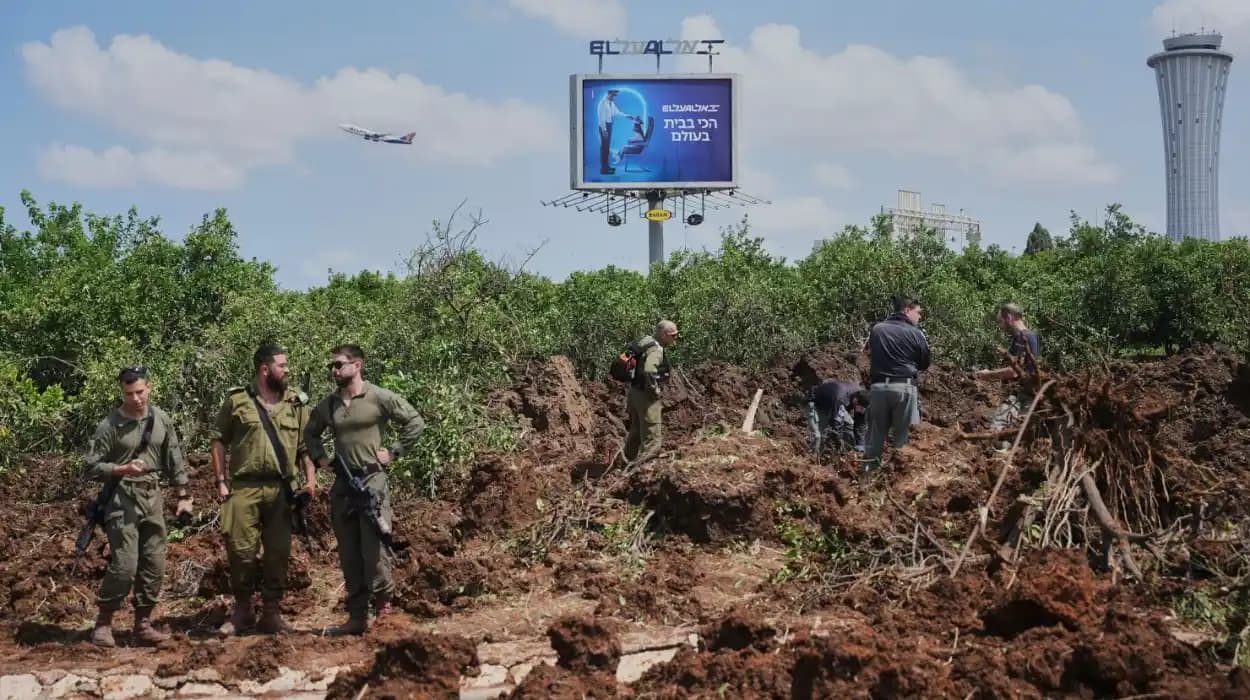
The missile landed in an open area near the airport, causing a large crater, damaging a road and a vehicle, and injuring eight people, two during evacuation to shelters (Wikipedia).
Air Defence Systems Show Flaws
Initial investigations by the Israeli Air Force (IAF) commander revealed no systemic faults in the detection systems or alert mechanisms across the defence network. The failure was deemed an isolated technical malfunction limited to the interceptor missile itself, rather than systemic weaknesses in surveillance or response protocols (The Jewish Chronicle). In the prolonged conflict environment surrounding Israel, the IAF boasts a missile interception success rate exceeding 95%.
Despite this, the ability of a hypersonic missile to evade detection and interception has raised alarm among military analysts. Amir Bar Shalom, military affairs analyst for Israel's Army Radio, remarked the missile attack was “very accurate if you’re launching from 2,000 kilometers, it’s impressive” and warned that
“you have to take this threat seriously” (Wikipedia).
Disruption and Damage from the Missile Strike
The missile strike led to significant operational paralysis at Ben Gurion Airport, Israel’s busiest international gateway. Flights were temporarily suspended and numerous major airlines, including British Airways, Lufthansa, Air France, and several others, cancelled services for subsequent days (Wikipedia). All airport entrances were closed, and public transport services, including train journeys, were halted as precautionary measures.
The missile’s impact extended beyond physical destruction; air raid sirens sounded throughout central Israel, including Tel Aviv and Jerusalem, forcing residents to seek shelter (Oneindia News). The fragments of missile debris struck residential areas, such as the central Israeli town of Ginaton, causing property damage but no fatalities as reported. Local resident Ilana Hatoumi described the moment saying:
“I was sitting in the shelter, I heard a boom, everything exploded — and that was it… The windows shattered. We’re fine, I’m healthy” (Ynet News).
Escalation Linked to Wider Regional Conflict
The Houthis cited the missile strikes as retaliation for Israeli air attacks on Yemeni Houthi-controlled ports in Hodeidah, reportedly targeting facilities used for smuggling and weapons manufacturing. The Israeli Air Force launched retaliatory raids using more than 30 aircraft, striking nine targets including a cement factory and the Hodeidah port (Wikipedia).
This conflict between Israel and Houthis in Yemen has intensified since late 2023, following Israel's conflict with Hamas in Gaza. Since November 2023, the Houthis have routinely targeted Israeli cities and maritime traffic, notably with drone and missile attacks. The latest missile attacks demonstrate Yemen's emergence as a direct front in the broader regional conflict involving Iran, Israel, and Palestinian territories.
Further Military and Civilian Implications
Israel's defence forces continue to probe whether the missile contained Iranian cluster munitions, which could disperse multiple smaller explosives, increasing area damage and complicating threat detection (Ynet News). The Houthi's own military footage showed the missile breaking apart midair, challenging Israeli claims of successful interception.
Notably, the missile strike and subsequent investigation have highlighted weaknesses in Israel’s layered missile defence architecture, considered among the most advanced globally. The incident has triggered debate within Israeli defence circles regarding readiness and countermeasures against hypersonic threats.
On August 22, 2025, further Houthi drone and missile attacks were intercepted, though fragments from a missile reportedly hit central Israel, including residential zones, again underscoring ongoing vulnerability (Times of Israel).
The Houthi missile strike on Ben Gurion Airport in May 2025 marks a significant escalation in Yemen’s direct military challenge to Israel. It exposed technical flaws in the Israeli missile interception at a critical infrastructure point, temporarily paralyzing the country’s main air hub and injuring civilians. The incident is a stark reminder of the evolving security threats Israel faces, particularly from hypersonic missile technology in the possession of non-state actors backed by regional powers.
With ongoing retaliations and missile launches between Israel and the Houthis, the region faces heightened volatility, reinforcing the strategic need for enhanced missile defence adaptation and diplomatic efforts to prevent further escalation.