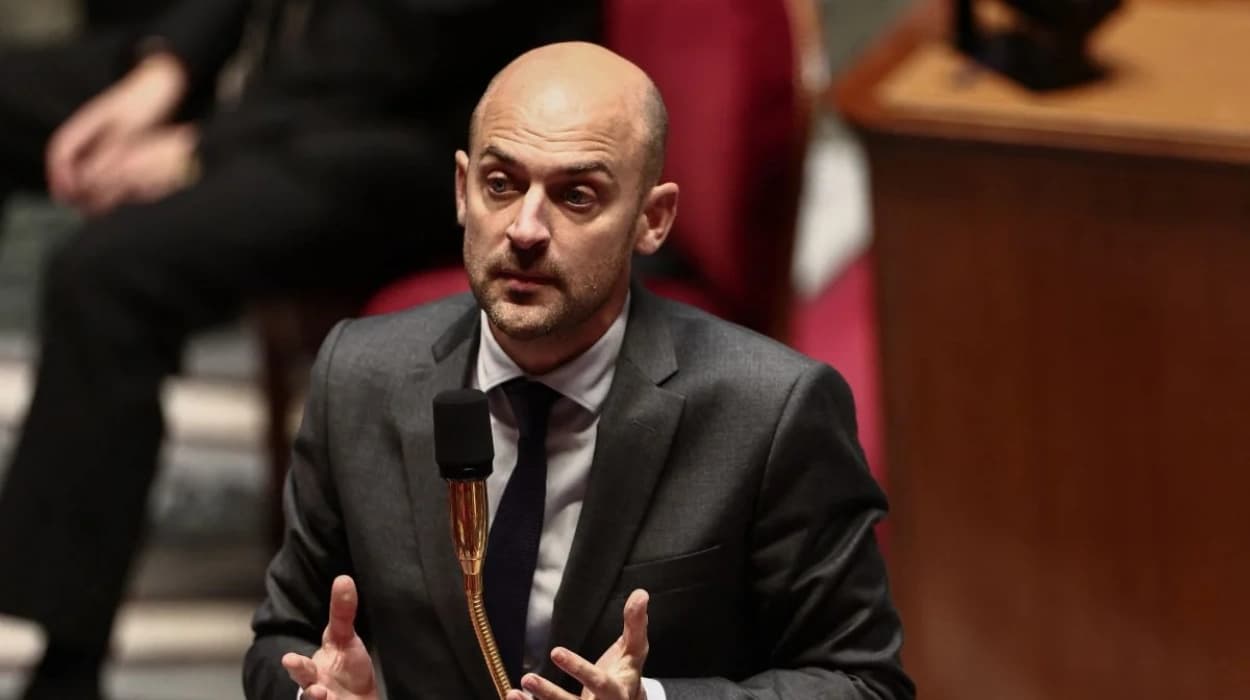
Beirut (The Palestine Telegraph Newspaper) February 06, 2026 - French Foreign Minister Jean-Noël Barrot stated the Lebanese army must receive adequate means to disarm Hezbollah. In an interview with AFP published Thursday, Barrot emphasised France's support for Lebanon's state institutions. The comments follow recent ceasefire agreements and UN Resolution 1701 implementation discussions.
French Foreign Minister Jean-Noël Barrot gave the interview to Agence France-Presse on February 5 during a Paris meeting with Lebanese officials. Barrot specified that strengthening the Lebanese Armed Forces represents the only viable path to recover state monopoly on arms. He reaffirmed France's commitment to military assistance programmes established since 2006.
The remarks align with France's role as UN Security Council Resolution 1701 "friend of the sponsor" and longstanding military cooperation with Beirut. Barrot spoke ahead of a February 10 Paris conference on Lebanon stabilisation.
Context of Barrot's AFP Interview Statements
Barrot told AFP:
"The Lebanese army must be given the means to disarm Hezbollah. This constitutes the sole guarantee for lasting security in southern Lebanon."
He detailed France's ongoing provision of training, equipment, and technical assistance to Lebanese forces. Current programmes include €150 million allocated since 2020 for armoured vehicles, surveillance drones, and border security systems.
The minister highlighted France's delivery of 12 Caesar howitzers to the Lebanese army in December 2025, funded through French Development Agency. Barrot noted 450 Lebanese officers trained annually at French military academies in Saint-Cyr and Metz.
Implementation Status of UN Security Council Resolution 1701
UNSCR 1701, adopted August 2006, mandates exclusive deployment of Lebanese army and UNIFIL south of Litani River. French General Hervé Pommier, UNIFIL Force Commander since January 2026, reported 8,200 Lebanese troops deployed across 22 positions as of February 4. Hezbollah maintains estimated 15,000 fighters and 150,000 rockets in the area.
France contributed 700 troops to UNIFIL's 10,500-strong force. Barrot welcomed November 27, 2025 ceasefire halting 14-month Israel-Hezbollah exchanges that killed 2,100 Lebanese and 80 Israelis.
French Military Assistance Programmes to Lebanon

France leads European contributions to Lebanese army modernisation through the International Support Group mechanism. Equipment transferred includes 20 VAB armoured personnel carriers, 150 night-vision devices, and 12 Gazelle helicopters overhauled in Cazaux. Training cycles cover counter-terrorism, explosive ordnance disposal, and maritime interdiction.
2026 French budget allocates €80 million for Lebanese forces, focusing on anti-tank systems and electronic warfare capabilities. Barrot announced plans for a French military hospital ship visit to Beirut March 2026.
Lebanese Government Position on Army Strengthening
Lebanese caretaker Prime Minister Najib Mikati welcomed Barrot's statements during their January 30 Paris meeting. Mikati confirmed army deployment to 45 southern border points, coordinating with UNIFIL Irish and Italian battalions. Lebanese Defence Minister Maurice Sleem reported 95 percent compliance with 1701 deployment timelines.
Army Commander General Joseph Aoun conducted joint patrols with UNIFIL Force Commander Pommier on February 2 along Blue Line. Hezbollah Secretary-General Naim Qassem stated January 15 the group supports army deployment but retains defensive capabilities.
Hezbollah's Military Capabilities and Arsenal Estimates

Hezbollah possesses Yakhont anti-ship missiles, Fateh-110 ballistic systems, and Iranian-supplied drones, per January 2026 French intelligence assessments. Rocket inventory estimated at 140,000-160,000 projectiles with 250km range covering Tel Aviv. Precision-guided munitions constitute 30 percent of stockpile.
France estimates Hezbollah budget at $800 million annually, funded through Iran ($700 million), diaspora contributions ($60 million), and narcotics ($40 million). UN Panel of Experts confirmed 45 Captagon factories operated by Hezbollah in Syria until December 2025.
Regional Reactions to French Position
Israel Defence Minister Israel Katz welcomed Barrot's remarks during their February 3 Jerusalem meeting. Katz confirmed IDF withdrawal from five southern Lebanese positions per ceasefire terms. U.S. Special Envoy Amos Hochstein praised French initiative during Munich Security Conference.
Iranian Foreign Ministry spokesperson Esmaeil Baghaei criticised Barrot February 6, calling statements "interference in Lebanese sovereignty." Saudi Foreign Minister Prince Faisal bin Farhan endorsed position during Paris talks.
UNIFIL Mandate Renewal and French Contributions
UN Security Council extended UNIFIL mandate October 2025 for 12 months, authorising inspections of Hezbollah sites south of Litani. France seconded 12 officers to Joint Coordination Committee overseeing 1701 implementation. French Ambassador to Lebanon Hervé Magro chaired February 4 trilateral meeting with Israeli and Lebanese counterparts.
UNIFIL recorded 1,200 ceasefire violations January 2026, down 85 percent from October peak. Italian Major-General Alberto Zappalorti reported destruction of 18 Hezbollah bunkers during Israeli operations.
Historical Context of French-Lebanese Military Relations
France commanded historic military mission in Lebanon 1943-1946 under French Mandate. Bilateral defence cooperation revived 1975 with Centre d'Etudes et de Coopération Militaire. France delivered 120 Leclerc tanks to Lebanese army 2009-2015.
2019 French parliamentary report documented €1.2 billion assistance since 2006, training 8,500 Lebanese personnel. President Macron hosted Army Commander Aoun at Elysee Palace July 2024.
European Union Support for Lebanese Armed Forces
European Union contributed €500 million to Lebanese army since 2011 through European Peace Facility. Italy delivered 10 Mangusta attack helicopters; Greece transferred 20 Panhard armoured cars. Germany funded €120 million satellite surveillance system operational since 2024.
EUFOR Lebanon training mission instructed 1,200 recruits at Shama base January 2026. Spain contributed €45 million for maritime patrol vessels.
U.S. and Gulf State Contributions to Lebanese Military
United States provided $2.1 billion assistance since 2006, including 60 M60 tanks and 200 Humvees. UAE transferred $200 million for army salaries January 2026. Qatar delivered 20 armoured ambulances and field hospital equipment.
UK Foreign Secretary David Lammy announced £50 million package during January 2026 Beirut visit, funding coastal radars.
Technical Specifications of French Military Aid
Caesar 155mm howitzers offer 42km range with 6-round burst in 40 seconds. VAB VCI vehicles mount 20mm cannons, capacity 11 troops. COTAC laser designators enable precision strikes with Milan missiles. French Thales Ground Master 200 radars detect aircraft at 250km.
Lebanese army operates 45 French-supplied Fast Attack Crafts along 225km coastline.
Lebanese army lacks 8,500 personnel against 25,000 authorised strength. Budget covers 60 percent salaries; desertion rates reached 15 percent 2025. Hezbollah controls 40 percent Bekaa Valley territory.
France funded construction of 22 border observation posts along 145km Syria frontier. UNIFIL deminers cleared 1.2 million square metres since November 2025.
Diplomatic Initiatives and Paris Conference Preparations
France hosts February 10 Lebanon Support Group meeting with 32 countries pledging $1.5 billion assistance. Barrot announced €300 million French envelope for army and Internal Security Forces. World Bank coordinates $800 million reconstruction package.
Lebanese President Joseph Aoun visits Paris February 8 preceding presidential elections scheduled May 2026.
Statements from Key Lebanese Stakeholders

Army Commander Aoun declared February 3:
"Lebanese Armed Forces sole legitimate defender of sovereignty."
Free Patriotic Movement leader Gebran Bassil endorsed French assistance. Phalange Party called for constitutional army monopoly on force.
Hezbollah MP Ali Ammar stated group supports "state institutions within resistance framework."
International Monitoring Mechanisms Established
UN Tripartite Coordination Mechanism verifies Litani deployments. French satellite imagery tracks Hezbollah movements twice daily. EU Satellite Centre provides weekly assessments to Paris and Brussels.