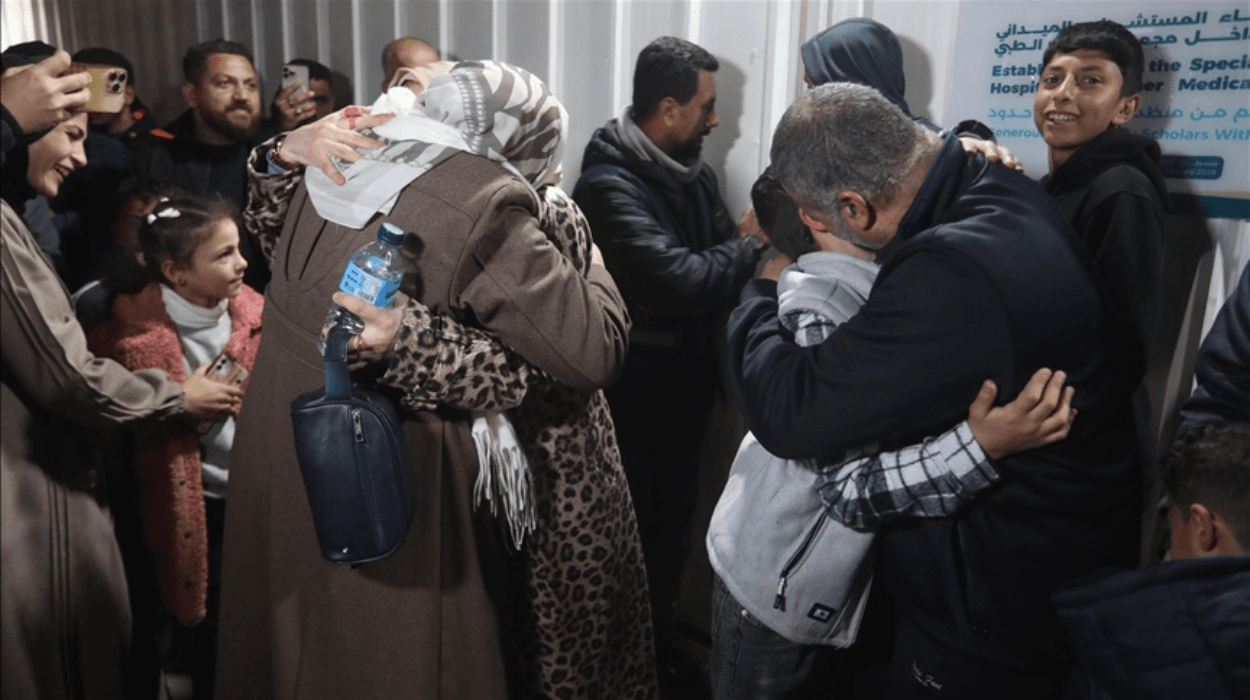
United Nations (The Palestine Telegraph Newspaper) February 6, 2026 – The United Nations has issued a warning regarding reported abuses against Palestinians attempting to return to Gaza through the Rafah crossing. Officials highlighted incidents of harassment, detention, and denial of entry reported at the border. The alert follows multiple accounts from displaced families seeking to re-enter amid ongoing conflict and displacement in the region.
The United Nations Office for the Coordination of Humanitarian Affairs (OCHA) reported that hundreds of Palestinians have faced challenges at the Rafah crossing since its partial reopening in late 2025. Border officials have been cited in UN dispatches as turning back individuals without clear justification, citing security concerns linked to the Gaza war. Witnesses described instances where returnees were subjected to prolonged interrogations and physical searches.
Background on Rafah Crossing Operations
The Rafah crossing, located on the Egypt-Gaza border, serves as the primary conduit for Palestinians fleeing or returning amid the Israel-Hamas conflict that escalated in October 2023. Egypt has intermittently allowed limited returns following international pressure, but restrictions persist due to fears of mass influxes straining Sinai resources. The UN documented over 1,200 attempts by Gazans to return in the past month, with approximately 40% denied entry.

Al Jazeera coverage from early February 2026 detailed specific cases where families, including women and children, were held for hours in no-man's-land between checkpoints. Egyptian authorities stated that returns are coordinated with Palestinian officials in Gaza, prioritising those with valid permits. However, UN monitors noted discrepancies, with some returnees possessing pre-war residency documents rejected outright.
UN Documentation of Reported Abuses
OCHA's latest bulletin, released on February 5, 2026, catalogued 15 verified incidents of alleged mistreatment at Rafah. These included verbal abuse, confiscation of belongings, and in two cases, reported beatings by security personnel.
TRT World (@trtworld) reported on the UN rights office findings in a recent post, highlighting specific claims. TRT World (@trtworld) said in X post,
“UN rights office says Palestinians returning through Rafah report abuse, humiliation and coercion by Israeli forces, warning the pattern may deter people from going back to Gaza.”
A spokesperson for the UN Human Rights Office told BBC News that monitors had interviewed 22 returnees who described "degrading treatment" during processing. The Palestinian Ministry of Foreign Affairs echoed these concerns in a statement to Anadolu Agency, claiming that measures at the border violate bilateral agreements on civilian movement. Egyptian Foreign Ministry officials countered in a Cairo press briefing that all actions comply with national security protocols amid threats from Gaza-based militants. No independent verification of individual claims has been possible due to restricted access for journalists.
Andy Worthington (@GuantanamoAndy) drew attention to the official UN report confirming these patterns. Andy Worthington (@GuantanamoAndy) said in X post,
“The UN Office of the High Commissioner for Human Rights confirms reports of ill-treatment, abuse and humiliation by Israeli military forces against Palestinians returning to #Gaza from Egypt via the Rafah Crossing.”
Impact on Displaced Palestinian Families
Over 1.9 million Palestinians remain displaced within Gaza, per UNRWA figures updated February 6, 2026. Many who fled to Egypt via Rafah in 2024-2025 now face dilemmas, with hotel evictions in Cairo exacerbating pressures to return. Families reported spending thousands of Egyptian pounds on smuggling fees only to be repelled at the border.
The Guardian reported on February 4 that at least five children were separated from parents during chaotic return attempts last week. UN agencies urged Egypt to streamline processes and allow humanitarian observers permanent presence at the crossing. Egypt's response, via state media, affirmed commitment to facilitating "safe and orderly" returns while protecting border integrity.
Historical Context of Rafah Restrictions
Rafah has been a flashpoint since Israel's blockade tightened post-October 7, 2023. Egypt closed the crossing fully from May 2024 to December 2025, citing Israeli military operations nearby. Partial reopenings followed US-brokered talks, with Qatar and UAE mediating aid flows. Associated Press dispatches from 2025 noted over 100,000 Palestinians crossed into Egypt during peak evacuations.

In 2026, returns averaged 50 per day, far below the 500 daily departures, according to Egyptian Red Crescent data cited by The New York Times. UN officials attribute the imbalance to abuse fears, with return rates dropping 20% since January warnings. Both Israeli and Egyptian militaries maintain checkpoints, complicating flows.
Statements from Key Stakeholders
UN Secretary-General António Guterres addressed the issue during a February 6 Security Council briefing, calling for "unhindered civilian movement" across Rafah. "Reports of abuse undermine humanitarian principles," he stated, without naming specific parties directly. The Egyptian Ambassador to the UN denied systemic violations, emphasising that 85% of return applications are approved post-screening.
Hamas officials in Gaza welcomed the UN alert, demanding international investigation. The Palestinian Authority in Ramallah criticised border measures as "collective punishment." US State Department spokesperson Matthew Miller, in a February 5 readout, expressed concern over "bottlenecks" but praised Egypt's aid facilitation efforts.
Humanitarian Aid Coordination Challenges
Aid convoys through Rafah have delivered 2,500 tonnes of supplies since January, per World Food Programme logs. However, returnee processing diverts resources, delaying distributions inside Gaza. Médecins Sans Frontières reported treating 30 border returnees for injuries and exhaustion last week. UN OCHA coordinator Sigrid Kaag highlighted in a Geneva presser the need for "transparent protocols" to prevent abuses.

Egypt's Health Ministry confirmed treating 12 returnees for minor ailments unrelated to border incidents. Coordination meetings between the UN, Egypt, and Israel occur weekly in Arish, but progress on returns remains stalled.
Regional and International Responses
The Arab League discussed Rafah at its February 3 Cairo summit, issuing a resolution urging Egypt to expedite returns. Qatar pledged $50 million for displaced Palestinians in Sinai. European Union foreign ministers, meeting in Brussels on February 5, called for UN-led monitoring at crossings.
President Donald Trump's administration, via envoy Steve Witkoff, brokered related Gaza ceasefire talks in January 2026, including Rafah provisions. No breakthroughs on returns were announced. Human Rights Watch urged sanctions on officials linked to abuses, though no evidence was presented.
Ongoing Monitoring Efforts
UN human rights monitors plan increased Rafah presence pending Egyptian approval. OCHA's next report, due February 14, will include updated incident tallies. Palestinian rights groups continue documenting cases via hotlines. Egyptian authorities invited UN verification teams for February 10 inspections.
As of February 6, 2026, Rafah remains open for limited operations, with 120 returns recorded yesterday. Press access is barred, limiting external corroboration. The situation evolves amid broader Gaza truce negotiations.